











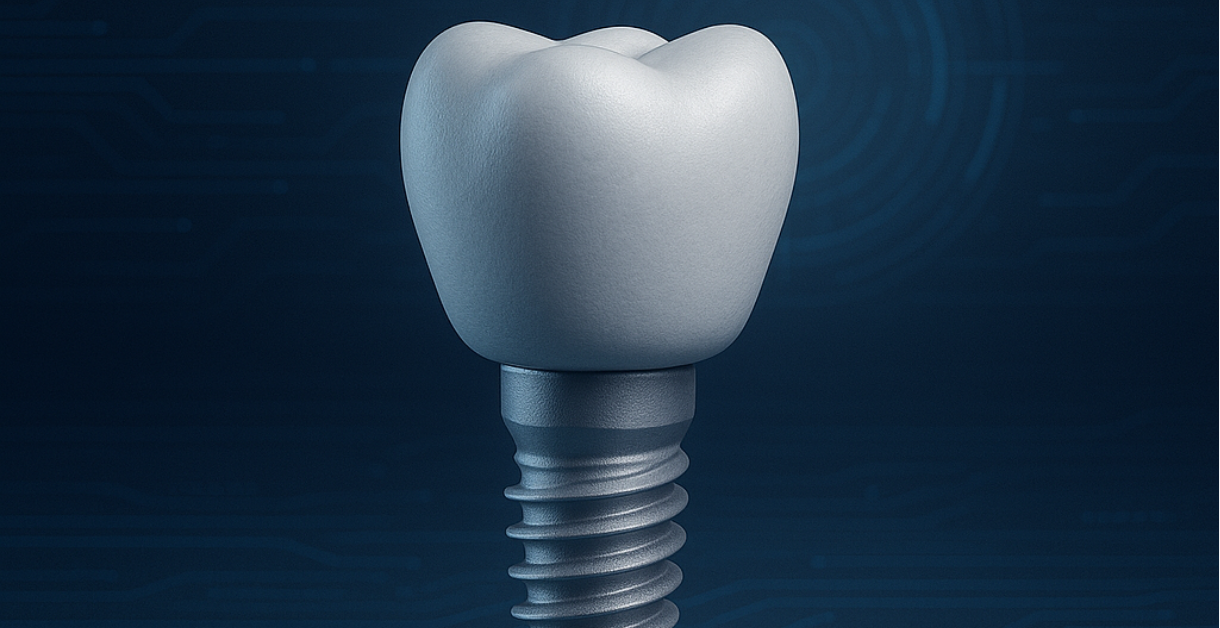
Ceramic Tooth Implant on a Tech Background
3D-Printed Silicon Nitride Implants: Reshaping the Future of Orthopedic & Dental Care
In Brief
- • 3D-Printed silicon nitride implants combine strength, antibacterial properties, and bone integration.
- • Additive manufacturing enables orthopedic and dental implants specific to each patient with porous scaffolds for tissue growth.
- • Vat photopolymerization and material extrusion dominate biomedical applications, achieving over 95% density and toughness.
Ceramic materials have played a role in medicine for a long time. Silicon nitride has emerged as a standout, offering an unusual combination of fracture toughness, wear resistance and biological compatibility. Advances in additive manufacturing allow it to be shaped with a level of precision that wasn’t possible in the past.
Ad
Conventional orthopedic and dental implants are typically made from metals or polymers. However, metals can release wear particles, interfere with imaging, or contribute to infection risk. While polymers often lack the mechanical strength needed for long-term applications.
Silicon nitride seems to provide the solution. Furthermore, it exhibits high mechanical strength suitable for orthopedic use, with antibacterial properties that reduce the likelihood of post-surgical infection.
Additive manufacturing extends these advantages by enabling porous architectures that encourage tissue ingrowth rather than simple surface contact. Resulting in stronger implants, and designed to participate in biological healing.
Ad

Inside the Study: How the Implants Are Printed
The research examines several additive manufacturing techniques capable of producing medical-grade silicon nitride components.
Vat photopolymerization stands out for its precision, achieving densities as high as 99.8% and compressive strengths around 764 megapascals in dental implant prototypes.
On the other hand, material extrusion methods demonstrated the ability to produce scaffolds exceeding 95% density with surface properties that enhance protein absorption. Which is a key factor in bone integration.
Other approaches, like direct ink writing, show promise for functional enhancements. Delivering antibacterial rates above 94%, although vat photopolymerization and material extrusion currently dominate the biomedical research.
They both offer a balance between structural performance, scalability and manufacturability.
Where These Implants Are Already Making an Impact
Applications of 3D-printed silicon nitride extend across mutiple medical disciplines. In orthopedics, the material is being explored for hip and knee replacements, spinal fusion cages and load-bearing plates.
Also, in dentistry, it shows promise for crowns, posts, and patient-specific dental implants that match jaw anatomy.
However, the most compelling cases involve irregular bone defects, where custom-printed implants can restore structure and function more precisely than other solutions.
Challenges That Still Stand in the Way
Despite its promise, 3D-printed silicon nitride is not without limitations. Fatigue resistance in printed ceramics still resembles conventional components.
This is why researchers are exploring composite approaches, combining silicon nitride with polymers or metals to balance toughness and flexibility.
Cost remains a significant barrier as well, with medical-grade powders and clinical validation contributing to high development expenses.
The study does not suggest an overnight revolution, but it does point toward a future where implants are engineered as much for biology as for mechanics.
More Must-Reads:
How do you rate this article?
Subscribe to our YouTube channel for crypto market insights and educational videos.






Join our Socials
Briefly, clearly and without noise – get the most important crypto news and market insights first.
Most Read Today
1
Peter Schiff Warns of a U.S. Dollar Collapse Far Worse Than 2008
2Samsung crushes Apple with over 700 million more smartphones shipped in a decade
3Dubai Insurance Launches Crypto Wallet for Premium Payments & Claims
4XRP Whales Buy The Dip While Price Goes Nowhere
5Luxury Meets Hash Power: This $40K Watch Actually Mines Bitcoin
Latest





8
Also read
Similar stories you might like.

Bitcoin
Bitcoin Slides Alongside Gold and Silver as Pressure Hits Markets
Patrick | 2026-01-29
Crypto News
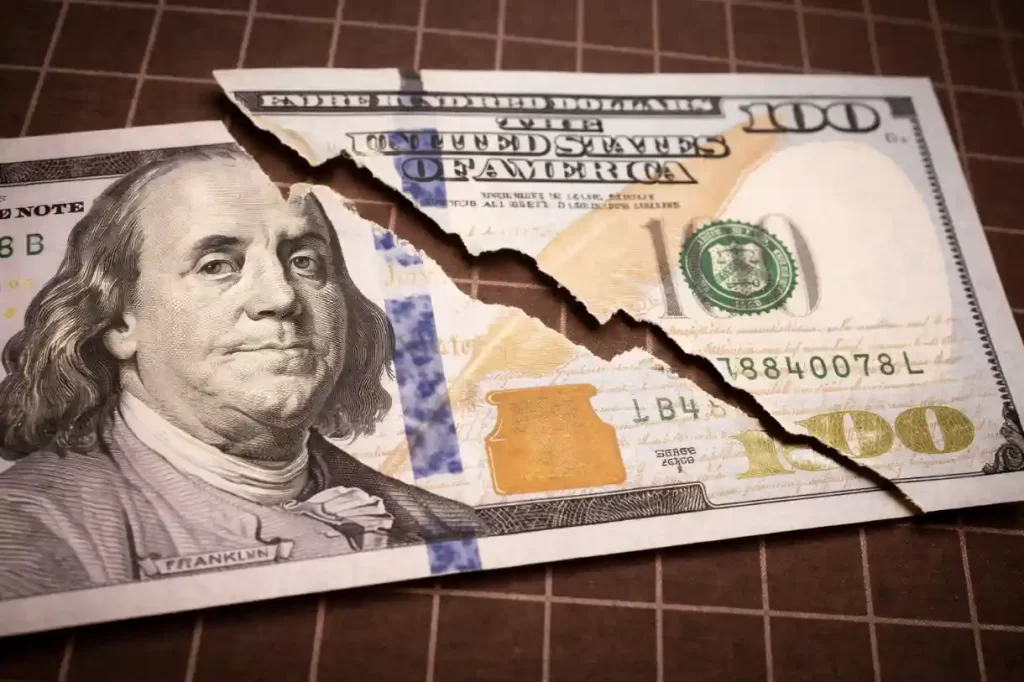
Peter Schiff Warns of a U.S. Dollar Collapse Far Worse Than 2008
Patrick | 2026-01-29

Crypto News
Dubai Insurance Launches Crypto Wallet for Premium Payments & Claims
Patrick | 2026-01-29
Altcoins
XRP Trades Under Heavy Structure as Derivatives Pressure Continue
Patrick | 2026-01-29

Crypto News
UAE Central Bank Approves First USD-Backed Stablecoin, USDU
Patrick | 2026-01-29

Bitcoin
Why Bitcoin Looks Weak Today But Strong Long-Term
Ana | 2026-01-29

Altcoins
Tom Lee’s Bitmine Deepens Massive Ethereum Staking Bet to $7.6B
Ana | 2026-01-29
Altcoins
Dogecoin Bulls vs. Bears? One Key Line Decides Everything
Ana | 2026-01-29

Altcoins
XRP Whales Buy The Dip While Price Goes Nowhere
Ana | 2026-01-29

Altcoins
Russia Finalizes Rules for Bitcoin, Ethereum, and Stablecoins
Ana | 2026-01-29