








XRP Ledger has quietly built a stablecoin market above $1.3 billion — and almost all of it now depends on one asset.
DefiLlama data shows the network’s stablecoin market capitalization at approximately $1.313 billion. RLUSD, Ripple’s dollar-backed stablecoin, represents 92.98% of that total.
The concentration is striking. It means roughly nine out of every ten stablecoin dollars currently sitting on XRPL are tied to RLUSD.
Latest Stories
Rain Files for a U.S. National Trust Bank Focused on Stablecoin Infrastructure

Fidelity Treasury Exposure Goes Onchain Through Singapore-Licensed DigiFT

Ondo Opens 24/7 Onchain Access to Private Companies, Starting With AI
RLUSD has become the center of XRPL liquidity
XRPL’s current DeFi TVL is much smaller, at roughly $44.9 million. That makes the stablecoin pool almost thirty times larger than the capital locked in the network’s decentralized finance protocols.
This matters because stablecoin market capitalization and DeFi TVL measure different types of adoption. A chain can host large amounts of payment or settlement liquidity without that capital being deposited into lending markets, liquidity pools or yield protocols.
DefiLlama currently shows around 2.32 million daily XRPL transactions and more than 41,000 active addresses. DEX volume, however, is just under $3 million over 24 hours.
The result is a network whose stablecoin balance looks institutional relative to its decentralized trading footprint.
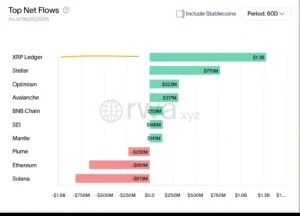
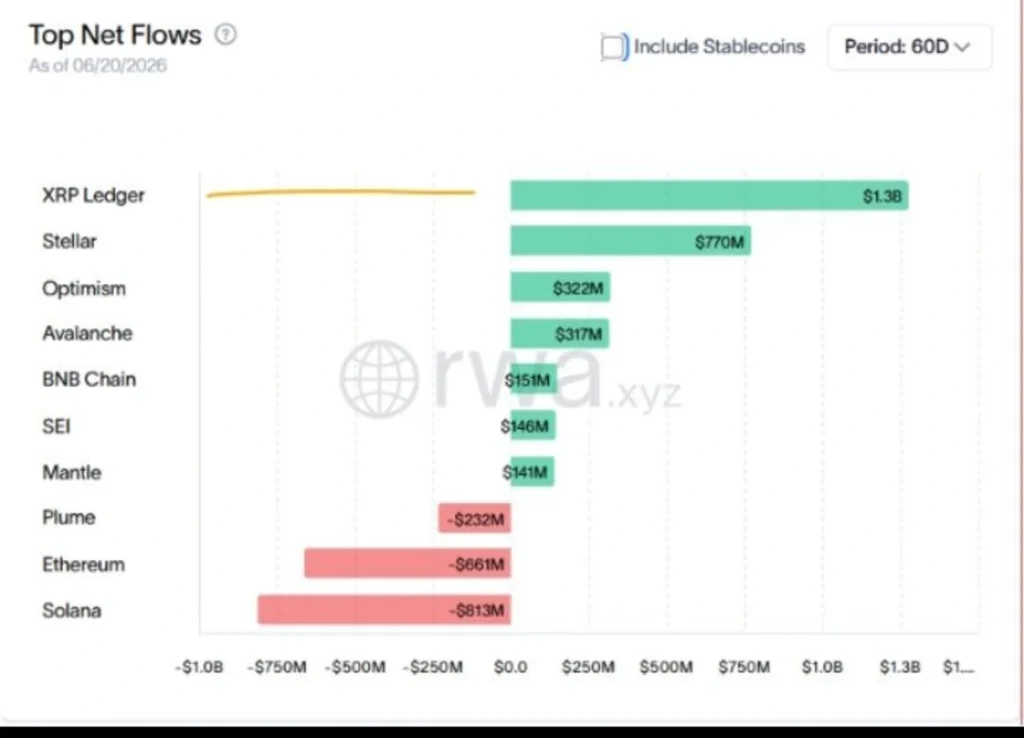
RWA.xyz tells a similar story from another angle. Its XRPL dashboard shows $1.25 billion in stablecoin market capitalization and more than 81,000 stablecoin holders, alongside billions of dollars in monthly tokenized-asset transfers.
Concentration creates both efficiency and dependency
RLUSD’s 93% share gives XRPL a clear liquidity anchor. Integrations can standardize around one dominant dollar asset instead of fragmenting volume across multiple stablecoins.
But concentration also creates dependency. If RLUSD issuance, regulation or distribution changes, the effect on XRPL’s stablecoin market could be much larger than it would be on Ethereum or Solana, where liquidity is spread across several major dollar tokens.
This does not mean the concentration is inherently negative. Many emerging payment networks begin with one anchor asset. The more important question is whether secondary stablecoins, lending markets and tokenized securities begin building around that liquidity.
For XRP investors, stablecoin growth is worth tracking separately from token price. The network can expand its role as a settlement rail without every new stablecoin dollar translating directly into XRP buying.
The structural signal is that XRPL now has a meaningful dollar-liquidity base. The next phase depends on whether developers and institutions can turn that parked liquidity into deeper markets and more persistent transaction activity.
Sources: DefiLlama XRPL data and RWA.xyz.
How do you rate this article?
Subscribe to our YouTube channel for crypto market insights and educational videos.






Join our Socials
Briefly, clearly and without noise – get the most important crypto news and market insights first.
Most Read Today
1
Mobile Onboarding & Player Experience: Streamlining App UX and Registration Funnels for iGaming Affiliates
2Clarity Act 2026: Everything You Should Know
3Chainlink Keeps Building Its Strategic Reserve: The Bigger Move May Be Ahead
4New Phishing Scam Targets Metamask Users – What to Do
5Chainlink Keeps Stacking LINK — The Reserve Has Crossed $70M
Latest








8
Also read
Similar stories you might like.
Crypto News
Rain Files for a U.S. National Trust Bank Focused on Stablecoin Infrastructure
TechGaged | 2026-10-06

Altcoins
Cardano DEX Volume Jumps 143% in a Week as DeFi TVL Rebounds
TechGaged | 2026-10-06
Altcoins
XRP Ledger RWA Transfer Volume Hits $7.03B — Up 1,469% in 30 Days
TechGaged | 2026-10-06

Blockchain
AI Traces $387M Bitget Heist to North Korea as 2026 Losses Cross $1B
Rokas | 2026-10-03
Crypto News
XRP Is Moving Beyond Crypto-Only Products as Traditional ETF Exposure Expands
Azeez | 2026-09-27
Crypto News
XRP Breaks a Seven-Month Barrier as Whale Activity Hits a Fresh High
Azeez | 2026-09-23
Crypto News
XRP Takes Center Stage in a Gold-and-Oil Sovereign Reset Scenario
Azeez | 2026-09-21
Crypto News
XRP Whale Activity Is Picking Up — The Next Price Move Could Be Significant
Azeez | 2026-09-16
Crypto News
Ali Martinez Spots an XRP Breakout Setup as Investors Watch
Azeez | 2026-09-14
Crypto News
XRP Joins Bitcoin, Ethereum and Solana in a Major U.S. Listing Framework
Azeez | 2026-09-10