













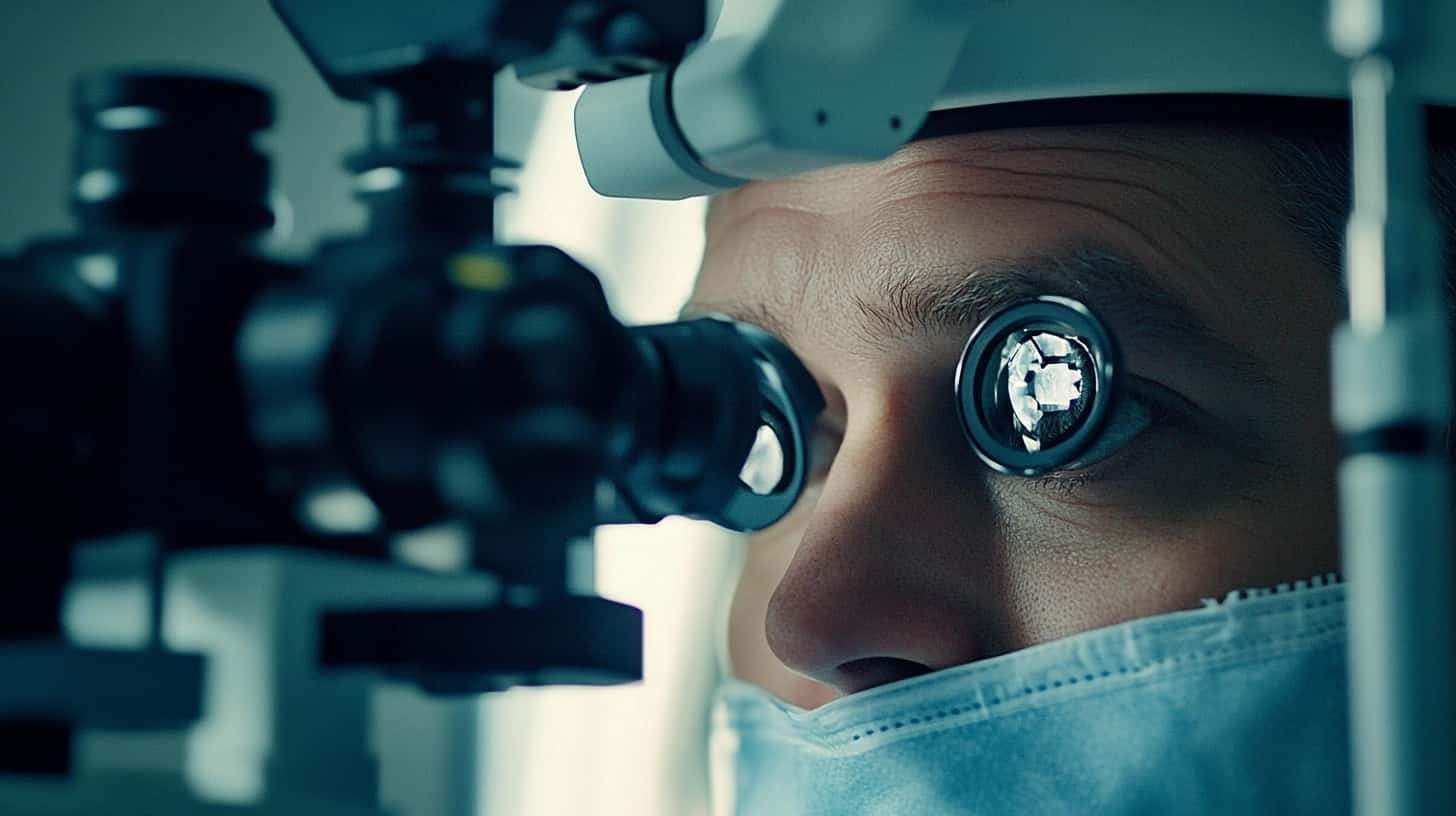
Performing an eye surgery
Researchers at the University of Utah are testing a new robot device that could help in more precise retinal surgery.
Ad
In a press release on 20 February, the university said the robot being developed by University of Utah’s John A. Moran Eye Center and the John and Marcia Price College of Engineering aims to give surgeons “superhuman” hands.
The findings of the research have been published in the journal Science Robotics, funded by by the National Institutes of Health
Eye surgery with precision
The retina is one of the most delicate parts of the body, so surgery on it requires a lot of precision, especially because the surgeon is dealing with a layer of cells less than a millimeter thick.
Ad
With just human hands, there’s room for a lot of mistakes in movement which can result in unintended injury, hence the need for a more precise method of carrying out the operation.
The new retinal-surgery robot is extremely precise, executing movements as small as 1 micrometer (smaller than a single human cell).
Mounted directly on to the patient’s head using a helmet, it is able to compensate for movements of the patient’s head to keep the eye still under the robot.
The robot also scales down the surgeon’s movements, measured using a handheld robotic device known as a haptic interface that controls hand tremors and focuses on the patient’s eye.
Impressive results
A successful test of the robot has been carried out using enucleated pig eyes and the result published this week. Commenting, co-author Eileen Hwang, a Moran Eye Center retinal surgeon said:
“The unique feature of this robot, head mounting, may make it possible for patients to have subretinal injections under intravenous (IV) sedation, rather than general anesthesia. IV sedation allows for faster recovery and is safer in some patients. Robots may also allow for more precise delivery of gene therapy medication compared to manual injections for more reproducible, safer treatments.”
In the test, surgeons achieved higher success rates while using the surgical robot device to perform subretinal injections while also avoiding ophthalmic complications.
How do you rate this article?
Subscribe to our YouTube channel for crypto market insights and educational videos.






Join our Socials
Briefly, clearly and without noise – get the most important crypto news and market insights first.

Most Read Today
1
Samsung crushes Apple with over 700 million more smartphones shipped in a decade
2Peter Schiff Warns of a U.S. Dollar Collapse Far Worse Than 2008
3Dubai Insurance Launches Crypto Wallet for Premium Payments & Claims
4XRP Whales Buy The Dip While Price Goes Nowhere
5Luxury Meets Hash Power: This $40K Watch Actually Mines Bitcoin
Latest




Most Read Today

MOST ENGAGING
8
Also read
Similar stories you might like.
Research
MIT Just Gave Robots Insect-Level Reflexes
Ana | 2025-12-16
Artificial Intelligence
Breakthrough AI Enables Seamless Control of Prosthetic Hands
Shedrach | 2025-12-12

Artificial Intelligence
Robot Bartender ADAM Wows Fans at Vegas Golden Knights Game
Shedrach | 2025-12-12

Artificial Intelligence
Musk Predicts The Year Robots Will Replace Our Jobs
Ana | 2025-12-01

Artificial Intelligence
Chinese Robot Breaks Guinness World Record by Walking 106 km
Shedrach | 2025-11-22
Business &Amp; Technology
Spider Robot Can 3D-Print a House in 24 Hours – The Future of Construction?
Ana | 2025-11-19

Artificial Intelligence
Elon Musk Stuns Fans: Optimus’ Viral Hand Wasn’t New Version
Ana | 2025-11-13

Artificial Intelligence
Man loses nuclear clearance after uploading AI-generated ‘robot porn’ to DOE
Ana | 2025-10-15

Artificial Intelligence
Tesla unveils Optimus 3 with Grok integration and human-like hands
Ana | 2025-09-04

Artificial Intelligence
Elon Musk envisions ‘universal high income’ if robots take our jobs
Ana | 2025-08-27