










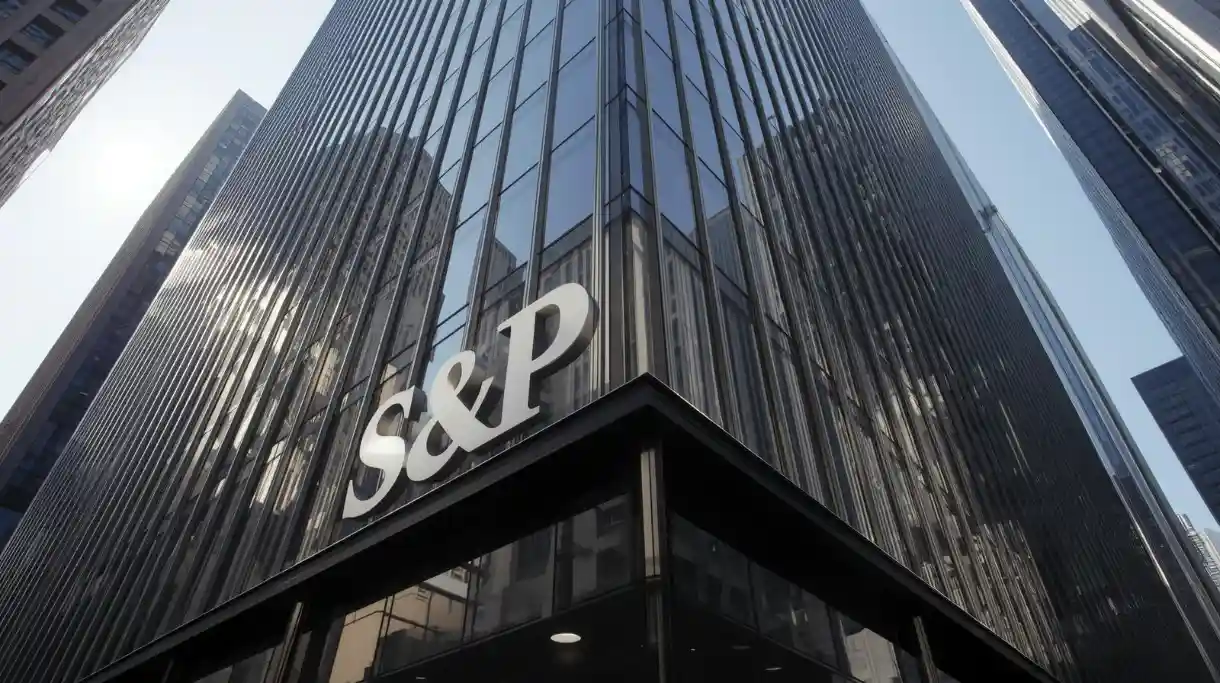
A picture of S&P global building
Tether CEO Blasts S&P for Calling USDT Risky
In Brief
- • S&P Global downgraded USDT’s risk rating due to rising exposure to high-risk reserve assets.
- • The report flagged concerns about reserve composition, regulatory gaps, and redeemability protections.
- • Tether’s CEO criticized the assessment, arguing that legacy financial institutions have performed worse.
S&P Global has received backlash from Tether CEO Paolo Ardoino for downgrading USDT with a risky asset rating. Ardoino in his response to the recent rating raised some serious issues that challenge legacy institutions and traditional investing.
Ad
The CEO said despite the safety ratings given to traditional financial institutions based on models like those of S&P, such companies have led to colossal losses for investors. In contrast, he said Tether was built outside the legacy system and still stands despite the skepticism around it.
S&P Highlights Concerns with Tether
S&P Global is known for its rating of institutions and companies based on selected metrics to give investors advisory on which assets to invest in. The company last rated Tether based on its ability to maintain its USD peg in 2014, putting it in category 4 as constrained, but the recent rating pushes it to 5, which is Weak.
Although the company acknowledged USDT as the largest and most widely used stablecoin with a stable price for years, it said the current rating is based on the rising interest in high-risk assets in the USDT reserve and limited disclosures. In its report, S&P wrote:
“These assets include bitcoin, gold, secured loans, corporate bonds, and other investments, all with limited disclosures and subject to credit, market, interest-rate, and foreign-exchange risks. Bitcoin now represents about 5.6% of USDT in circulation, exceeding the 3.9% overcollateralization margin, indicating the reserve can no longer fully absorb a decline in its value.”
Ad
The report further highlighted other observed weaknesses including limited transparency on reserve management and risk appetite, absence of a strong regulatory framework, lack of investors’ protection against issuer’s insolvency, and limitations to USDT’s primary redeemability.
Tether CEO Says USDT Better than Legacy Institutions
In response, Ardoino said S&P is only worried that Tether was built outside of the legacy financial system and defies a system that regulators have come to question over time. Tether is currently the third-largest cryptocurrency with a valuation of roughly $185 billion.
As part of the company’s policy, it has partnered with security agencies to combat illicit use of USDT and other stablecoins. In July, Tether made an investment of an undisclosed amount in Crystal Intelligence, a blockchain analytics firm that provides advanced risk monitoring, fraud detection, and regulatory intelligence solutions to fight illicit flow of funds such as the Iran-linked $700 million it seized.
More Must-Reads:
How do you rate this article?
Subscribe to our YouTube channel for crypto market insights and educational videos.






Join our Socials
Briefly, clearly and without noise – get the most important crypto news and market insights first.

Most Read Today
1
Samsung crushes Apple with over 700 million more smartphones shipped in a decade
2Peter Schiff Warns of a U.S. Dollar Collapse Far Worse Than 2008
3Dubai Insurance Launches Crypto Wallet for Premium Payments & Claims
4XRP Whales Buy The Dip While Price Goes Nowhere
5Luxury Meets Hash Power: This $40K Watch Actually Mines Bitcoin
Latest




Most Read Today

MOST ENGAGING
8
Also read
Similar stories you might like.
Crypto News
Tether Launches USA₮, a Regulated Dollar-Backed Stablecoin
Patrick | 2026-01-27
No image
Beginners
Digital Cash: Stablecoins Real-Life Utility
Patrick | 2026-01-04

Beginners
Stablecoins & Staking: Access Safer Crypto Growth
Patrick | 2025-12-28

Industry
Whale Loses Massive USDT Stash in Archaic Scam Trick
Shedrach | 2025-12-22

Industry
6 Cryptocurrencies Are Stealing the Show – Here’s Why Everyone’s Talking
Ana | 2025-11-11
Industry
Tether to combat illicit stablecoin use with new strategic investment
Shedrach | 2025-07-08
Industry
Tether freezes $700 million in USDT belonging to Iran-linked accounts
Shedrach | 2025-06-25
Industry
USDT won’t last forever, says Tether CEO Paolo Ardoino
Shedrach | 2025-02-28