









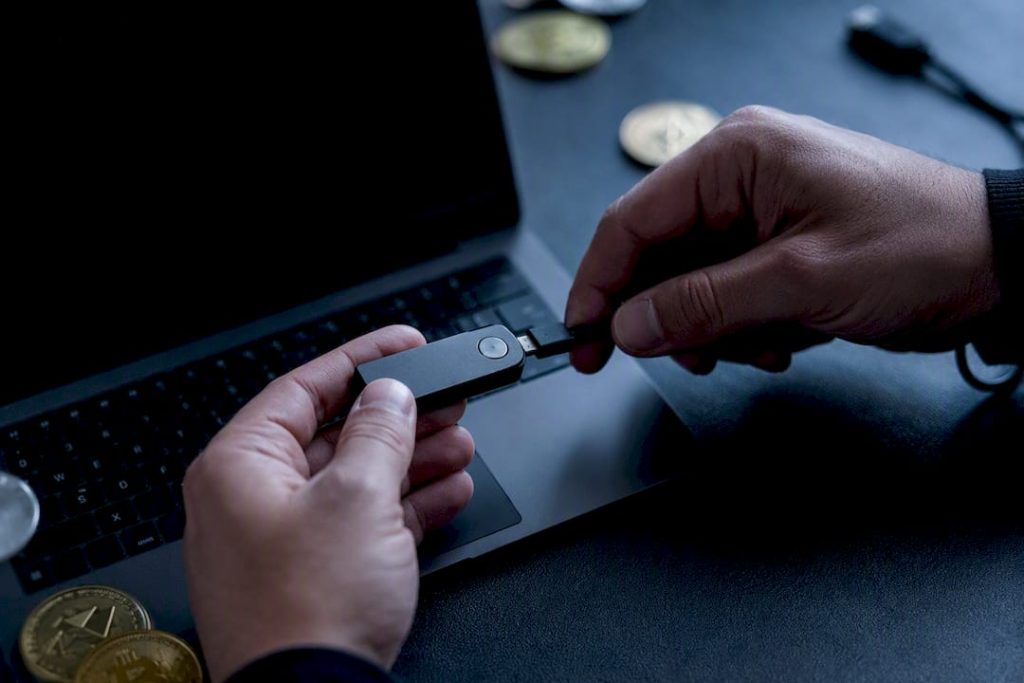
Hands connecting hardware cryptocurrency wallet

A smart contract wallet is an onchain account controlled by programmable code instead of a single private key, built on a design pattern called account abstraction. That code can enforce spending limits, require multiple approvers, or let a trusted guardian restore access if a device gets lost. The main advantage over a traditional wallet is resilience: losing one key no longer means losing everything, and the account can be programmed to handle gas payments, permissions, and recovery on its own terms. ERC-4337 is currently the dominant standard making this possible on Ethereum and its compatible networks.
TL;DR:
Latest StoriesRead all latest stories → U.S. Government Moves Part of Alameda BTC, Reviving Fears of a Major Liquidation
 XRP Whales Are Moving — Binance Records Largest Outflow in Six Months
 Fidelity Clients Keep Buying Bitcoin As Nine-Day Streak Continues
- Smart contract wallets often rely on the ERC-4337 standard, enabling features like social recovery and multisig approval without altering Ethereum’s core rules.
- Security risks include code flaws and poorly scoped modules, making thorough audits, permission reviews, and small-scale recovery tests essential before transferring significant funds.
- These wallets require careful setup, including guardians and limiting token allowances, and should be examined for open-source code, audits, and compliance with standards like ERC-4337 or EIP-7702.
- They outperform traditional wallets by offering social recovery and gas abstraction, but are more vulnerable to bugs and malicious code if not properly maintained.
- The best smart wallet depends on individual needs, with a focus on audit history, control over upgrade authority, and recovery options, rather than brand or feature list alone.
How Do Smart Contract Wallets Actually Work?
Traditional Ethereum accounts, known as Externally Owned Accounts (EOAs), sign transactions directly with a private key. A smart contract wallet flips that model: the account itself is a contract, and its logic decides what counts as a valid transaction. That shift is what account abstraction refers to, and it’s the framing the entire ecosystem has settled around.
ERC-4337 makes this work without changing Ethereum’s core consensus rules. Instead of a normal transaction, a smart wallet submits a UserOperation, a structured request describing what it wants to do. Here’s who handles it:
- Bundlers collect UserOperations from a separate mempool and package them into a real transaction.
- EntryPoint is a singleton contract that verifies each UserOperation and executes it if valid.
- Paymasters are optional contracts that can sponsor gas fees, letting someone pay in a stablecoin or letting an app cover the cost entirely.
This is why a smart wallet transaction shows up onchain differently than a normal one. It’s technically a call from the EntryPoint contract, and the receipt you get reflects that batched, validated path rather than a direct signature. On other chains, native account abstraction (and Ethereum’s own EIP-7702, which lets an EOA temporarily borrow smart contract behavior) offer alternate routes to similar functionality.
Which Features Make These Wallets Useful?
The value of a smart contract wallet comes down to what its programmable logic lets you configure. Each feature below solves a specific pain point that EOA users deal with constantly.
- Social recovery. Trusted guardians (a friend’s wallet, a hardware key, a secondary device) can approve account recovery if you lose access, removing the single point of failure a seed phrase represents.
- Multisig approval. Transactions above a certain value can require sign-off from two or more parties, which is standard practice for shared funds or business treasuries.
- Session keys. A dApp can get temporary, limited permission to act on your behalf (say, for a gaming session) without ever touching your main authority.
- Gas abstraction. Fees can be paid in an ERC-20 token or sponsored entirely by a paymaster, which means you don’t need ETH sitting idle just to move funds.
- Batching. Multiple actions (approve a token, then swap it) can execute in a single UserOperation instead of two separate signed transactions.
Real use cases follow directly from these: gasless onboarding for a new user with no ETH, scheduled recurring payments for subscriptions, and safer NFT purchases where a session key limits what a marketplace contract can actually touch. Etherspot’s account abstraction use-case guide documents scheduled transactions and team multisig setups as two of the most common patterns individuals build today.
Are Smart Contract Wallets Actually Safe?
Programmable accounts trade one kind of risk for another. A traditional wallet’s biggest danger is losing your key. A smart contract wallet’s biggest danger is a flaw in the code governing that account, whether that’s a bug, a poorly designed upgrade path, or a permission granted too broadly. BitGo’s security research points to contract bugs, ungoverned upgradeability, and overly permissive access as the three failure modes that show up most often in real incidents.
Modules and third-party plugins expand what a wallet can do, but each one is also new code with its own attack surface. A paymaster that’s willing to sponsor any transaction can become a vector for abuse if it isn’t scoped correctly. Upgrade authority matters too: if a developer team (or worse, a single key) can push new logic to your wallet contract at will, that authority is effectively a backdoor.
Pro Tip: Before moving meaningful funds into any smart contract wallet, run a full recovery test with a small balance first. If your guardians or backup device can’t actually restore access, you want to find out before it matters.
A working security checklist:
- Confirm the wallet’s code is open source and has at least one independent audit.
- Check who holds upgrade authority and whether upgrades require a delay or multisig approval.
- Review every permission and token allowance you’ve granted, and revoke anything unused.
- Simulate a UserOperation before signing when your wallet interface supports it.
- Test your recovery path with guardians or backup devices before you need it for real.
Programmable wallets increase the number of things that can go wrong compared to a single key, which is exactly why audits and permission reviews aren’t optional extras.
How Do Smart Contract Wallets Compare to Traditional Wallets?
An EOA’s entire security model rests on one private key, usually backed by a 12 or 24-word seed phrase. Lose it, and the funds are gone permanently. A smart contract wallet replaces that single point of authority with programmable rules, guardians, and modules that can be updated or revoked.
- Custody: EOAs use one key; smart wallets can require multiple signers or guardian approval.
- Recovery: EOAs have no recovery path; smart wallets support social recovery and multi-device access.
- Gas and payments: EOAs need ETH for every transaction; smart wallets can abstract gas through paymasters.
- When EOAs still make sense: simple, low-value holdings where added complexity isn’t worth the setup effort.
Many experienced holders run both: an EOA for cold storage, a smart wallet for active use.
What Standards Should You Check Before Choosing a Wallet?
A handful of specs define whether a wallet actually follows the account abstraction model correctly, and checking them tells you a lot about how seriously a provider takes security.
- ERC-4337 defines the UserOperation, Bundler, and EntryPoint architecture that most smart wallets rely on without needing an Ethereum consensus change.
- EIP-7702 lets an existing EOA temporarily delegate to smart contract logic, giving users a migration path that doesn’t require starting from a brand-new address.
- EIP-1271 defines how a contract (rather than a person) can validate a signature, which matters for any dApp that wants to support smart wallet logins.
Beyond specs, look at adoption signals: how much volume runs through a wallet’s EntryPoint contract, whether its factory and module code are public, and whether audit reports are actually published rather than referenced vaguely. Implementations like the Coinbase smart wallet repository are open source and include explicit cautions about upgrade safety, which is the kind of transparency worth looking for elsewhere. Chains with native account abstraction handle some of this differently than ERC-4337 rollups, so confirm which model a given network actually uses before assuming compatibility.
How Should You Choose and Set Up a Smart Contract Wallet?
Evaluate a candidate wallet against five criteria before funding it: its recovery model, who holds upgrade authority, whether it’s been audited, how its paymaster is scoped, and how broad its default permissions are. A wallet that scores poorly on more than one of these is worth skipping.
- Pick a wallet with published, independent audits and open-source code you (or someone you trust) can actually review.
- Set up guardians or session keys immediately, don’t leave recovery configured as an afterthought.
- Limit token allowances to only what’s needed for the dApps you actually use.
- Run a small-value recovery test before depositing anything significant.
- Monitor onchain activity periodically, especially after connecting to a new dApp.
Pro Tip: Treat a smart contract wallet’s permission list the way you’d treat app permissions on your phone. Anything you’re not actively using should be revoked, not left “just in case.”
Red flags worth walking away from: no audit history, upgrade authority held by a single unverified key, or a paymaster willing to sponsor unlimited actions with no spending cap.
Where to Verify These Technical Claims
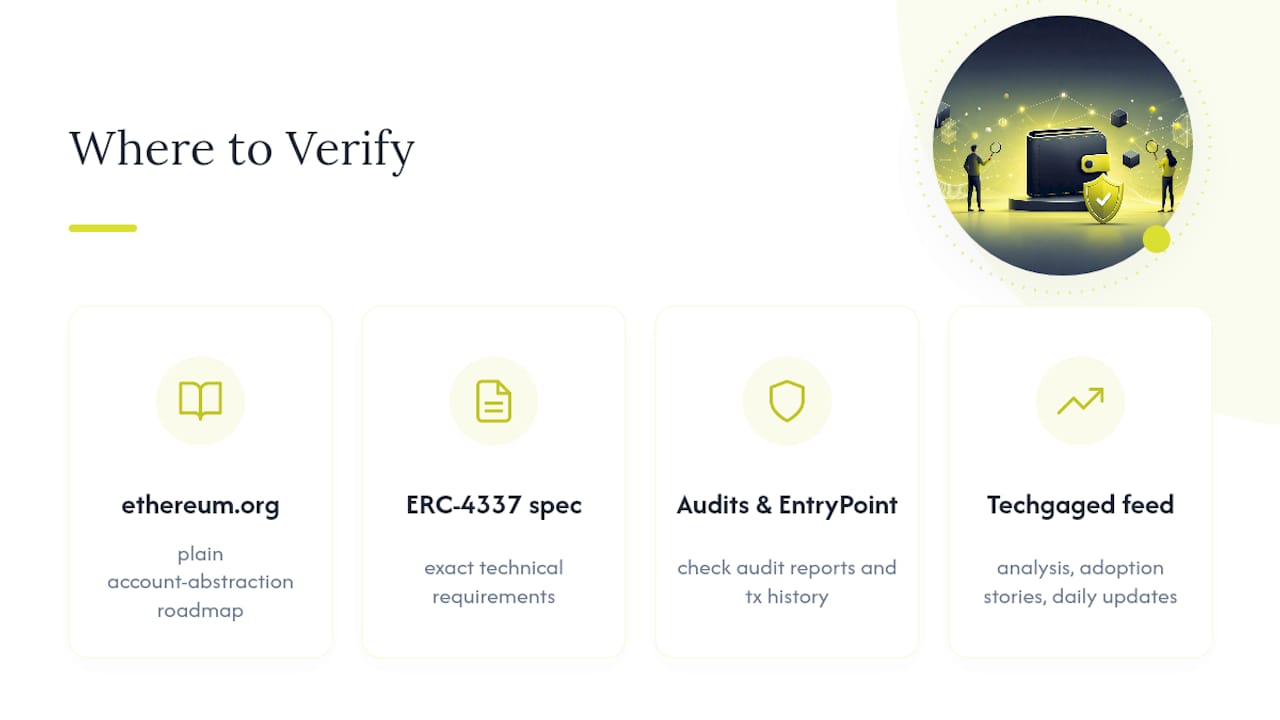
For primary reading, ethereum.org’s account abstraction roadmap explains the model in plain terms, while the ERC-4337 specification documents the exact technical requirements. Always check a wallet’s audit reports and its EntryPoint transaction history before trusting it with real funds.
Techgaged covers how wallet infrastructure connects to broader adoption trends, including Bitcoin’s faster-than-internet adoption curve and gasless payment rollouts like Tron’s fee-free USDT transfers, both relevant to where paymaster-style sponsorship is heading next.
If you’re weighing custody risk more broadly, Techgaged’s report on Cash App blocking a Bitcoin transaction “for his protection” is worth reading alongside this guide, since it shows how custodial platforms handle the same access-control problem smart wallets try to solve at the protocol level. For daily coverage of how these standards evolve, Techgaged’s full crypto news feed tracks new wallet launches, audit disclosures, and account abstraction developments as they happen.
This article is general information, not a substitute for advice from a qualified financial advisor. Consult a qualified financial professional about your own circumstances before acting on anything here.
Sources
FAQ
What Are Smart Wallets?
A smart wallet is a blockchain account governed by contract code instead of a single private key, allowing features like multisig approval, social recovery, and gas payment flexibility through account abstraction.
Which Smart Wallet Is the Best?
There’s no single best option. It depends on your priorities: check audit history, who controls upgrade authority, and whether the recovery model fits how you actually use the wallet before deciding.
Can XRP Handle Smart Contracts?
The XRP Ledger supports limited smart contract functionality through its Hooks amendment and native features, but it doesn’t run general-purpose smart contracts the way Ethereum does with ERC-4337 style account abstraction.
What Is the Best Smart Contract Platform?
Ethereum remains the primary platform for smart contract wallets through ERC-4337, though other chains offer native account abstraction with different tradeoffs around bundler infrastructure and gas sponsorship.
Do I Need ETH to Use a Smart Contract Wallet?
Not necessarily. Paymasters can sponsor gas fees or let you pay in an ERC-20 token, which is one of the main UX improvements account abstraction enables over traditional EOAs.
Recommended
How do you rate this article?
Subscribe to our YouTube channel for crypto market insights and educational videos.






Join our Socials
Briefly, clearly and without noise – get the most important crypto news and market insights first.
Most Read Today
1
Is It Altcoin Season Right Now? How to Check in Minutes
2XRP Whales Are Moving — Binance Records Largest Outflow in Six Months
3U.S. Government Moves Part of Alameda BTC, Reviving Fears of a Major Liquidation
4Fidelity Clients Keep Buying Bitcoin As Nine-Day Streak Continues
5AQAv2 Launch Could Boost HYPE Revenue by 18% and Fuel Buybacks
Latest




8
Also read
Similar stories you might like.
Crypto News
U.S. Government Moves Part of Alameda BTC, Reviving Fears of a Major Liquidation
Azeez | 2026-08-27
Crypto News
XRP Whales Are Moving — Binance Records Largest Outflow in Six Months
Azeez | 2026-08-27

Crypto News
Fidelity Clients Keep Buying Bitcoin As Nine-Day Streak Continues
Azeez | 2026-08-27

Crypto News
AQAv2 Launch Could Boost HYPE Revenue by 18% and Fuel Buybacks
Azeez | 2026-08-27

Crypto Guides
Is It Altcoin Season Right Now? How to Check in Minutes
Rokas | 2026-08-27

Crypto News
Bitcoin’s Next Big Test Emerges As $5B In IBIT Options Near Expiry
Azeez | 2026-08-26
Crypto News
Bitwise’s SOL Buying Spree Nears A Major $1B Milestone
Azeez | 2026-08-26
Crypto News
Chainlink Scores A Major Win As Coinbase Expands Tokenized Stocks
Azeez | 2026-08-26

Crypto News
Avalanche Records Strongest Tokenized Stock Growth In 24 Hours
Azeez | 2026-08-26

Crypto Guides
MiCA Regulation: What EU Crypto Businesses Must Do Now
Rokas | 2026-08-26