













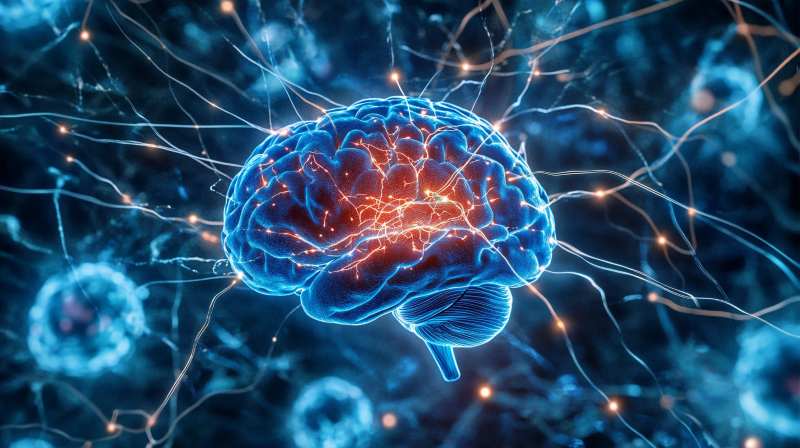
Scientists find brain filter that may control your consciousness
The complex nature of our brain has long fascinated and perplexed neuroscientists across the board trying to decode its secrets, and the recent breakthrough has found that a structure deep in the brain might govern our conscious awareness.
Ad
As it happens, for the first time in history, scientists have observed how structures deep in the brain react when the organ becomes aware of its own thoughts – known as conscious perception, according to a report published by Scientific American on April 4.
Notably, our brain is under constant fire of sights, sounds, and other stimuli, but we’re only ever aware of a sliver of the world around us, like the sound of someone’s voice or the taste of chocolate. Researchers have known for a long time that the cerebral cortex (the brain’s outer layer) plays a part in this awareness of specific thoughts.
As for the involvement of deeper brain structure, they could only observe it through invasive surgery and they even encountered problems when testing the concept in animals, making it difficult to study these regions and expand the scientific theories of consciousness beyond the cerebral cortex.
Ad
According to Liad Mudrik, a neuroscientist at Tel Aviv University in Israel:
“The field of conscious studies has evoked a lot of criticism and skepticism because this is a phenomenon that is so hard to study.”
Observing the brain filter
In a recent study, Mingsha Zhang, a neuroscientist at Beijing Normal University, focused on the thalamus (the region involved in processing sensory information and working memory, as well as presumably having a role in conscious perception) in participants already undergoing therapy for severe and persistent headaches.
This therapy included thin electrodes injected deep into their brains, which allowed Zhang and his colleagues to study brain signals and measure conscious awareness. They asked the participants to move their eyes in a particular way depending on whether they noticed an icon flash onto a screen in front of them. The icon was only noticeable about half of the time.
As it turns out, the activity in the participants’ thalamus and prefrontal cortex when aware of the icon’s appearance was massively different from when they were not. When they were aware of the icon, the activity was stronger in sections of the thalamus than in sections of the cortex and seemed to coordinate across them.
In the words of Mac Shine, a system neuroscientist at the University of Sydney, this indicates the role of the thalamus as a filter controlling which thoughts get through to awareness and which don’t. And the best part? Previous animal studies support these findings.
Results of animal studies
Specifically, a 2020 research involved the use of magnets to move individual mouse whiskers just enough for the mice to notice about half the time, with the animals being trained to take a lick from a water spout when they did feel the movement.
At the time, the scientists discovered that cells in the cerebral cortex, which reacted to the mice noticing the whisker-flick, projected down to deeper brain regions – including the thalamus.
As Mudrik opined, the latest study is “one of the most elaborate and extensive investigations of the role of the thalamus in consciousness.” Still, the question remains about whether the task genuinely captured neural activity associated with conscious experience or just tracked attention to a stimulus that was not necessarily consciously perceived.
Elsewhere, scientists have had a breakthrough in slowing down the harmful effects of aging on the brain, having discovered slippery proteins in its blood vessels forming a protective barrier that breaks down with age, eventually allowing damaging molecules into brain tissue and triggering inflammation, and gene therapy to restore the barrier in mice has been helpful.
How do you rate this article?
Subscribe to our YouTube channel for crypto market insights and educational videos.






Join our Socials
Briefly, clearly and without noise – get the most important crypto news and market insights first.
Most Read Today
1
Peter Schiff Warns of a U.S. Dollar Collapse Far Worse Than 2008
2Samsung crushes Apple with over 700 million more smartphones shipped in a decade
3Dubai Insurance Launches Crypto Wallet for Premium Payments & Claims
4XRP Whales Buy The Dip While Price Goes Nowhere
5Luxury Meets Hash Power: This $40K Watch Actually Mines Bitcoin
Latest






8
Also read
Similar stories you might like.

Industry
Google Searches for “How to Buy Gold” Explode Globally, Hitting a Two-Decade High
Rokas | 2026-01-26

Industry
Businesses now use crypto as operational capital, CoinGate data reveals a structural shift
Rokas | 2026-01-21

Bitcoin
$455 Billion in Bitcoin Exposed to Quantum Attack Risk via Address Reuse, Up 16% Since 2020
Jastra | 2026-01-20

Altcoins
Iran’s Crypto Activity Surges During Protests; Here’s Why
Ana | 2026-01-16

Industry
Stablecoin Market Share Hits an All-Time High of 10.19%
Jastra | 2026-01-14
No image

Bitcoin
Only Three Governments Increased Bitcoin Holdings in 2025 – U.S. Leads Following 130,000 BTC Seizure
Jastra | 2026-01-05

Industry
Solana Tokens Lose $157B in 2025, The Largest Dollar-Value Drop in the Chain’s History
Jastra | 2025-12-30

Artificial Intelligence
New Epstein Disclosures Collide With an AI Project Built Months Earlier
Ana | 2025-12-22
Artificial Intelligence
Scientists Use AI to Crack Nature’s Hidden Laws
Ana | 2025-12-18