













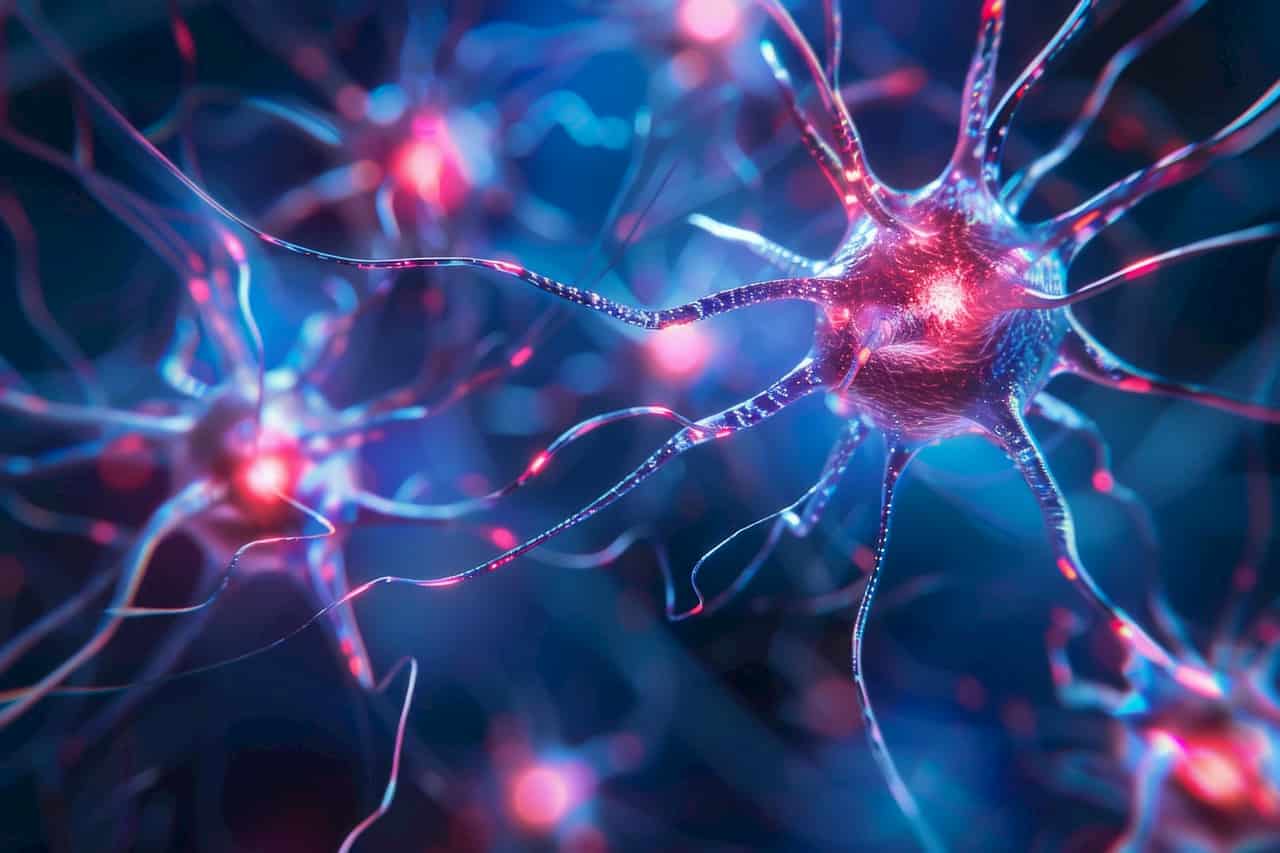
Picture of neurons
Oxford scientists to grow human brain cells in lab for Parkinson’s Disease study
Scientists in Oxford University including biologists and engineers have received a grant to grow human brain neurons in the lab.
Ad
The medical sciences division of the university on 14 February said the project is aimed at understanding how such neurons work to help in the study of Parkinson’s disease and other types of brain-related diseases.
A sum of £2 million has been awarded to the team for this project, which is the first of its kind.
A promising study
According to the medical sciences department, understanding and modelling how the circuit linking together the regions known as the midbrain, the striatum and the cortex has been difficult.
Ad
This presents a challenge because of the importance of understanding these structures in studying disorders such as Parkinson’s disease, addiction and autism.
This is because the human brain is mainly inaccessible and current technologies have been limited in the growing of these neurons to study them.
The new Oxford collaborative team of biologists and engineers led by Professor Richard Wade-Martins (DPAG/Kavli), Professor Ed Walsh (Dept. Engineering Sciences) and Dr Ricardo Marquez Gomez (DPAG/Kavli) will bring together the technologies of human stem cells and oil-wall microfluidics.
The publication read:
“The human stem cells will be used to generate each specific neuronal subtype of the cortical-striatal-midbrain circuit held within oil-walled chambers. Such chambers can reliably construct microenvironments and circuits with long-term accessibility, contrasting with current microfluidic technologies based on rigid and single use plastics.”
Key areas of focus
The study’s particular areas of interest will include physiology, regulation and cellular architecture of neurons in the circuit.
Others are the regulation of gene expression in the cell body and along the neuronal axons which form the circuits to understand how genes control neuronal circuit function.
It is expected that the outcome of the study will bring about a breakthrough in the understanding of Parkinson’s Disease and others that have eluded medical science for so long.
How do you rate this article?
Subscribe to our YouTube channel for crypto market insights and educational videos.






Join our Socials
Briefly, clearly and without noise – get the most important crypto news and market insights first.

Most Read Today
1
Samsung crushes Apple with over 700 million more smartphones shipped in a decade
2Peter Schiff Warns of a U.S. Dollar Collapse Far Worse Than 2008
3Dubai Insurance Launches Crypto Wallet for Premium Payments & Claims
4XRP Whales Buy The Dip While Price Goes Nowhere
5Luxury Meets Hash Power: This $40K Watch Actually Mines Bitcoin
Latest




Most Read Today

MOST ENGAGING
8
Also read
Similar stories you might like.
Research
UK scientists develop easy breath test for early lung disease detection
Shedrach | 2025-09-26

Research
Scientists link autism traits to Neanderthal DNA in humans
Ana | 2025-07-08
Research
Scientists find skin cells ‘scream’ for help when hurt
Ana | 2025-06-13

Research
Surprising Parkinson’s aid: ‘Magic mushrooms’ may improve motor skills, mood
Ana | 2025-04-30
Artificial Intelligence
Oxford scientists design forensic AI tool for predicting causes of head injuries
Rokas | 2025-02-26
Research
Scientists expose neurons hindering cancer treatment
Ana | 2025-02-18
Research
Researchers discover UK’s biggest Dinosaur footprints in quarry site
Shedrach | 2025-01-03