










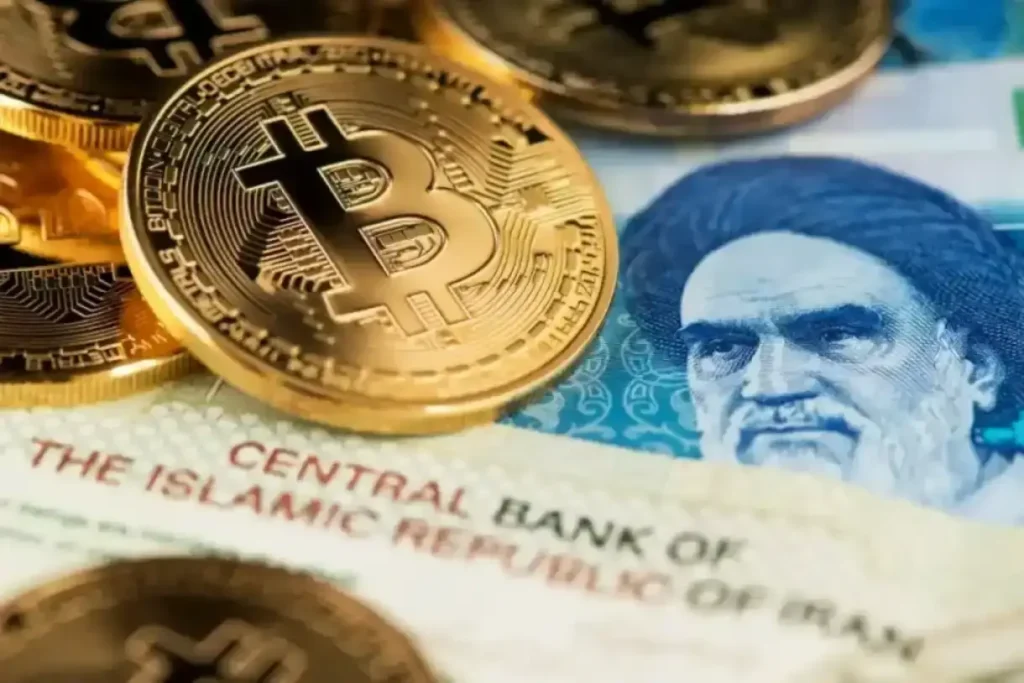
Bitcoin and Iranian rial banknotes beside Central Bank of Iran text. Source: TechGaged / Shutterstock.
Markets Watching Closely as Hormuz Tensions Heat Up Again
In Brief
- • Hormuz tensions are reigniting macro and inflation fears.
- • Bitcoin lost key support as risk sentiment weakened.
- • Oil prices are now the market’s main focus.

The ceasefire optimism that briefly lifted risk assets last week has run headlong into a new and sharper headline.
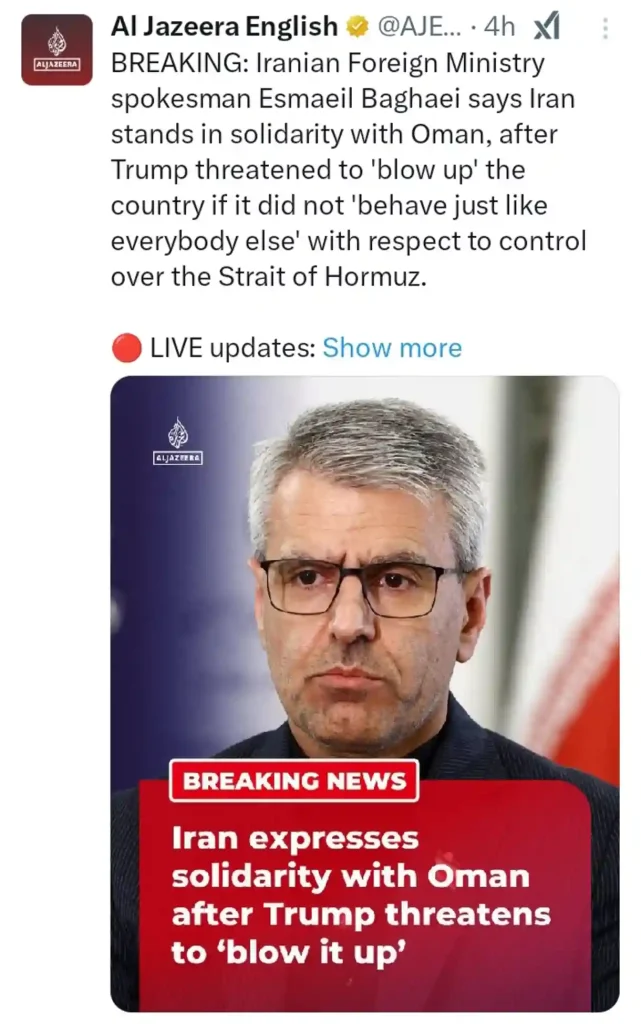
Al Jazeera English reported breaking news that Iran’s Foreign Ministry spokesman Esmaeil Baghaei declared Iran stands in solidarity with Oman.
This was after President Trump threatened to “blow up” the country if it did not “behave just like everybody else” with respect to control over the Strait of Hormuz.
The diplomatic temperature, which had appeared to be cooling just days ago, has escalated sharply. Markets are reacting accordingly.
From Ceasefire Optimism to Open Confrontation
The sequence of events this week has been brutal for anyone positioned around the softer geopolitical narrative.
Just days ago, headlines pointed toward a 60-day ceasefire extension and a potential strait reopening.
Now Iran is publicly aligning with Oman against direct American pressure, and the language from Washington has shifted from negotiation to threat.
For oil markets, that shift is unambiguously inflationary. For risk assets — Bitcoin included — it resurrects exactly the macro headwind that last week’s ceasefire story had briefly removed.
The Strait of Hormuz remains the world’s most consequential oil chokepoint, and any credible threat to its stability reprices energy risk globally within hours.
Markets spent last week pricing in de-escalation. They are spending this week unpricing it — and the unwind is faster than the rally ever was.
What the Bitcoin Chart Is Telling Us
The CoinGecko 7-day chart captured at approximately 13:57 UTC on May 28, 2026 is one of the cleaner illustrations of geopolitical risk pricing in real time.
Bitcoin opened the week near $77,500 on May 22, spent several days consolidating between $74,000 and $77,500 as the Iran nuclear complication emerged.
It then staged a tentative recovery toward $77,000 mid-week — only to roll over decisively from May 27 onward.
The selling has been sustained and directional, not the sharp flush-and-recover pattern of earlier weeks
By the time the chart was captured, Bitcoin had broken below $75,000, $74,000, and was trading at $73,405 — down 4.9% on the week and accelerating lower
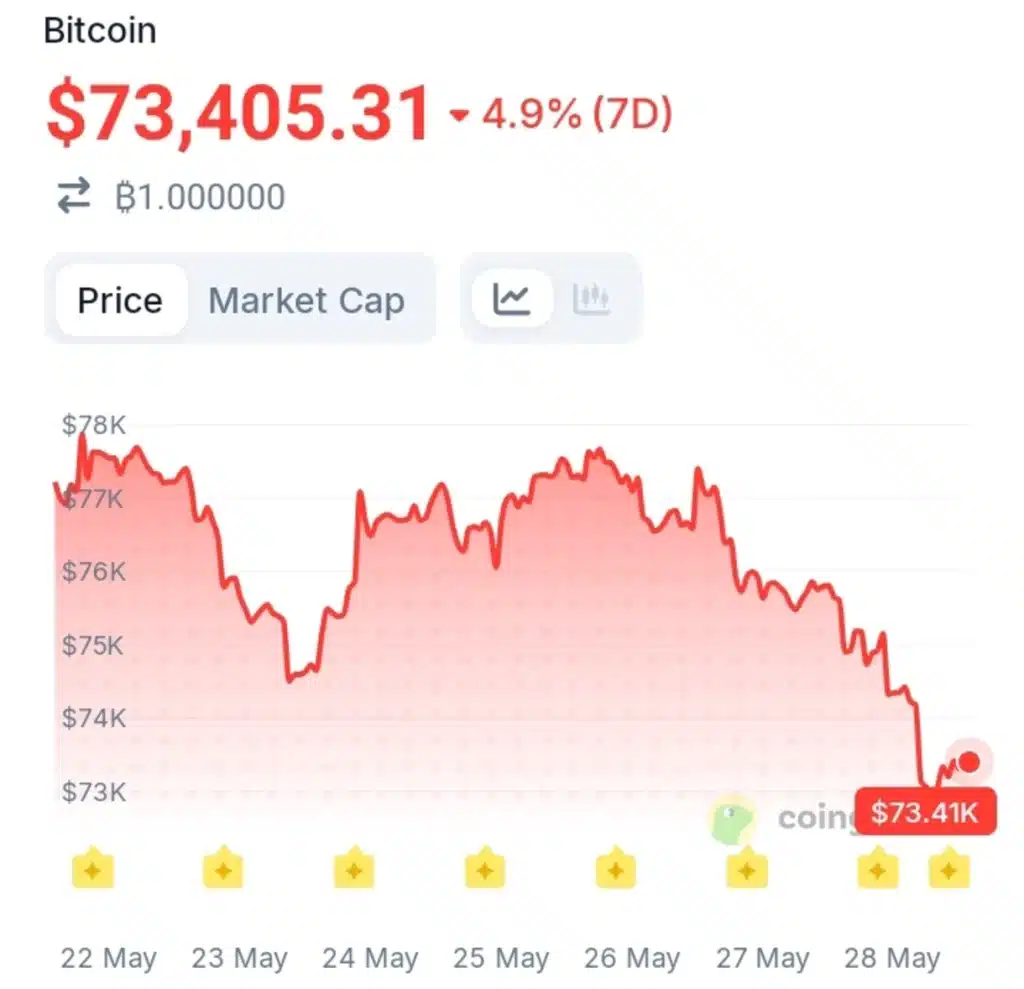
The absence of any visible bounce attempt at the $74,000 support level that held in prior weeks is the most telling detail. This time, that level gave way without a fight.
The weekly loss of 4.9% may look contained in percentage terms, but the structure of the decline — gradual, orderly, and uninterrupted — suggests institutional de-risking rather than retail panic.
That distinction matters because institutional de-risking driven by macro uncertainty tends to persist until the macro uncertainty resolves.
The Hormuz Variable Has Not Gone Away
What this week’s developments confirm is something the more cautious analysts flagged last week: a 60-day ceasefire framing was always a countdown, not a resolution.
With Iran now publicly supporting Oman and Trump deploying maximalist language around one of the world’s most sensitive waterways, the probability of a clean diplomatic outcome before that clock expires has narrowed considerably.
Brent crude markets will continue to serve as the leading indicator — a sustained move above $90 per barrel would signal the market is pricing in genuine supply disruption, and that scenario carries direct consequences for Federal Reserve policy expectations, risk appetite, and ultimately Bitcoin’s ability to find a floor.
The optimism of last week feels distant now. And with the Strait of Hormuz back at the centre of a direct US-Iran confrontation, the question the market cannot yet answer is whether this escalation is noise on the path to a deal — or the deal falling apart in real time.
Disclaimer:
This article is for informational purposes only and does not constitute financial, investment, or trading advice. The views expressed are based on publicly available data, market observations, and the author’s interpretation at the time of writing. Cryptocurrency markets are highly volatile and unpredictable, and past performance or current technical setups do not guarantee future results. Readers should conduct their own research and consult with a qualified financial advisor before making any investment decisions. TechGaged does not accept liability for any losses incurred based on the information presented.
How do you rate this article?
Subscribe to our YouTube channel for crypto market insights and educational videos.






Join our Socials
Briefly, clearly and without noise – get the most important crypto news and market insights first.
Most Read Today
1
Tom Lee Buys $230M in Ethereum — What Does He See Coming?
2SoFi’s Solana Move Could Be Bigger Than Markets Realize
3Vitalik Buterin Just Drew a New Roadmap for Ethereum
4XRP Sentiment Crashes to 3-Week Low — The Ultimate Dip-Buy Signal?
5Why Most Blockchains Are Slower in Reality Than In Theory
Latest






8
Also read
Similar stories you might like.
Crypto News
US-Iran Ceasefire Talks Advance — Are Markets About to React?
Azeez | 2026-05-24

Bitcoin
Will Nasdaq Bitcoin Index Options Drive More Institutional Capital into BTC?
Azeez | 2026-05-24
Crypto News
XRP ETFs Outperform Bitcoin Again — Is Smart Money Rotating Fast?
Azeez | 2026-05-23

Bitcoin
Bitcoin Consolidation Around $74K–$75K: What Traders Expect in the Coming Weeks
Azeez | 2026-05-23

Crypto News
Crypto Sentiment Is Shifting Fast — Could a Bigger Move Follow?
Azeez | 2026-05-22

Defi
President Trump Signs Order To Bring Crypto Into Mainstream Banking
Ana | 2026-05-21
Defi
Trump’s Truth Social Suddenly Pulls Bitcoin ETF Filing
Ana | 2026-05-20
Bitcoin
This Event Could Trigger Bitcoin’s Next Big Move
Azeez | 2026-05-20

Altcoins
Trump-Linked Crypto Firm Warns It May Collapse
Rokas | 2026-05-19
Bitcoin
Bitcoin May Be Entering a New Phase of Real-World Geopolitical Use
Azeez | 2026-05-18