










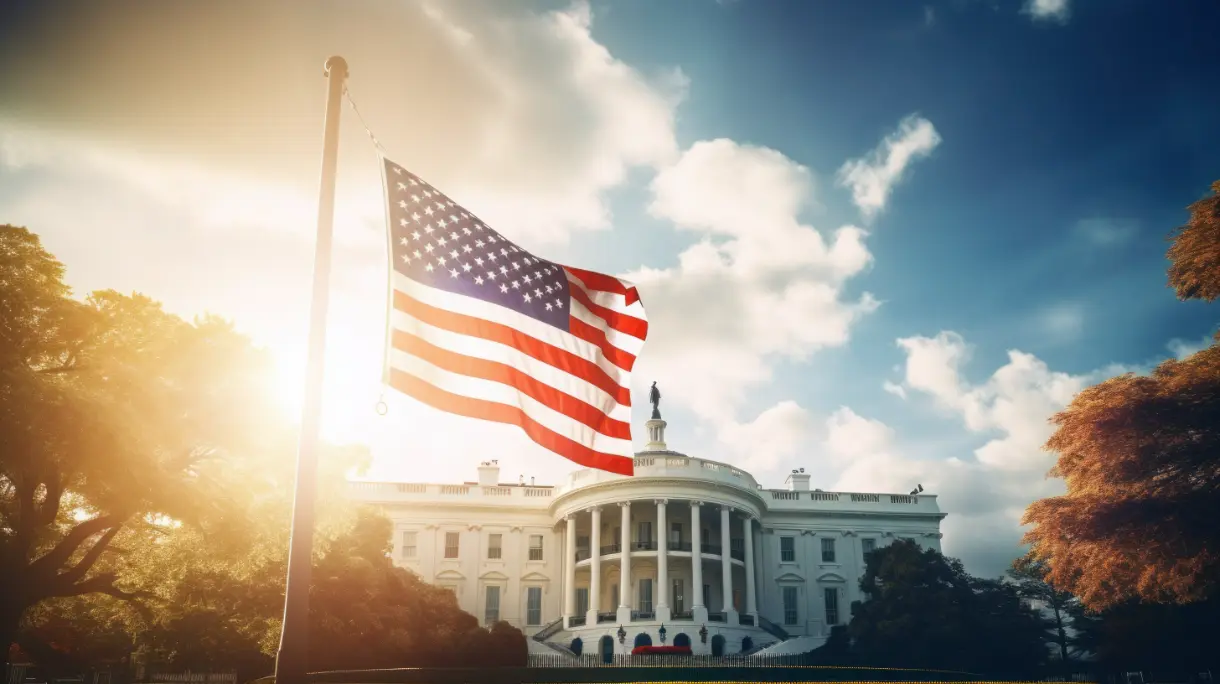
The White House announcing the US as a crypto capital.
Ad
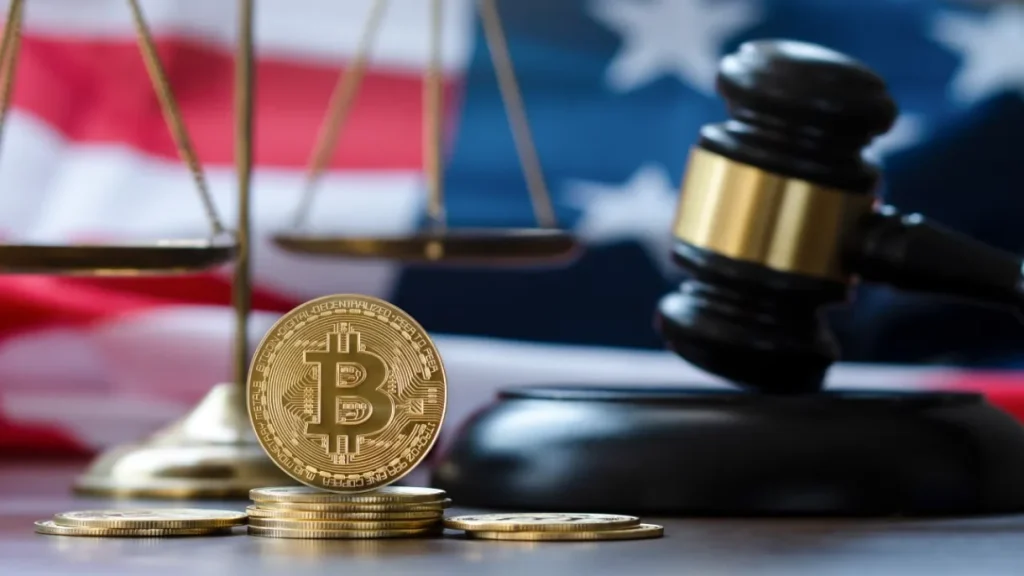
The White House has formally declared its ambition to make the United States the “crypto capital of the world”. Supported by a detailed roadmap from the President’s Working Group on Digital Asset Markets.
President Trump launched his vision for a Golden Age of Crypto in early 2025, signaling a dramatic shift in U.S. financial priorities.
The White House quickly reinforced this promise through Executive Order 14178. Which created the President’s Working Group on Digital Asset Markets.
This team developed a roadmap that places innovation, regulation, and consumer protection at the core of America’s crypto strategy. Moreover, the roadmap stresses the urgent need for regulatory clarity.
Agencies such as the SEC and CFTC often overlap, which generates confusion for businesses and slows adoption. Therefore, the plan assigns the CFTC direct authority over spot markets for non‑security digital assets.
This change ensures traders and institutions operate under a clear framework that supports growth while reducing uncertainty.
Additionally, the administration views this step as essential for building trust, attracting investment, and positioning the United States as the global leader in digital finance.
Building the Framework: Regulation, Banking, and DeFi
Furthermore, the administration addressed banking integration. Regulators ended “Operation Choke Point 2.0,” which had restricted crypto firms from accessing banking services.
Also, the roadmap clarifies how banks can safely engage in custody, tokenization, and stablecoin issuance. The GENIUS Act, now law, sets rules for stablecoins, requiring transparent reserves and oversight.
This legislation builds trust while encouraging innovation in payments.
Additionally, the White House emphasized decentralized finance. DeFi platforms offer new models for lending, trading, and asset management.
Regulators will allow controlled testing through sandboxes, which provide safe environments for experimentation. Developers can innovate while regulators observe and adapt rules in real time.
However, the administration remains cautious about central bank digital currencies. Officials argue that innovation must not compromise monetary sovereignty. Instead, they focus on private-sector solutions that align with U.S. economic leadership.
America’s Global Position
The broader implications extend beyond technology. By positioning America as the crypto capital, the administration aims to attract global talent, investment, and infrastructure.
Moreover, this strategy strengthens U.S. competitiveness against hubs like Singapore and Dubai. It balances innovation with oversight, ensuring consumer protection while empowering entrepreneurs.
If executed effectively, the plan could transform blockchain from a niche experiment into a core pillar of the financial system.
More Must-Reads:
How do you rate this article?
Subscribe to our YouTube channel for crypto market insights and educational videos.






Join our Socials
Briefly, clearly and without noise – get the most important crypto news and market insights first.

Most Read Today
1
Chainlink’s 499% Social Volume Spike: Why Attention is Outpacing Price
2Mantle’s $1B Milestone: Why MNT is the Next Layer 2 Powerhouse to Watch
3Cardano (ADA) Price Analysis: Quiet Accumulation as Technical Signals Begin to Strengthen
4Digital Silver’s Silent Strength: Litecoin (LTC) Fundamental and Technical Dive
5The Pi Day Pivot: Can Polkadot’s Massive Supply Cut Fuel a DOT Breakout?
Latest






8
Also read
Similar stories you might like.
Blockchain
Trump Pushes Crypto Bills, Says Banks Are Undermining Progress
Ana | 2026-03-04
Industry
Regulator Drafts GENIUS Act Implementation Proposal, Seeks Public Comment
Ana | 2026-02-26
Industry
The First GENIUS Act ETF Is Here – And It’s Built for Stablecoins
Patrick | 2026-02-19

Industry
Coinbase and Spotify launch stablecoin payment gateway for commerce
Shedrach | 2025-06-19
Industry
U.S senate finally passes bill for regulation of stablecoins
Shedrach | 2025-06-18