









ETH Is Leaving Exchanges at a Record Pace — Here's Where the Supply Is Going
Ethereum Exchange-Flow History Was Rewritten — Here’s Why Backtests Can Be Wrong

A chart showing Ethereum leaving exchanges can look like hard historical fact. In reality, the chart itself can change years later.
Coin Metrics has recomputed its Ethereum Standard Flow Metrics from genesis using its latest wallet-attribution data. The update affects all ETH exchange-flow metrics at both daily and hourly frequencies.
The reason is simple but important: data providers do not know every exchange wallet in real time. When a previously unknown address is later identified as belonging to Coinbase, Binance or another exchange, standard historical flow data can be recalculated to include that wallet’s earlier activity.
Latest Stories
Rain Files for a U.S. National Trust Bank Focused on Stablecoin Infrastructure

Fidelity Treasury Exposure Goes Onchain Through Singapore-Licensed DigiFT

Ondo Opens 24/7 Onchain Access to Private Companies, Starting With AI
The same date can show a different exchange outflow later
Coin Metrics explicitly distinguishes between standard flow metrics and its new Point-in-Time, or PIT, series.
Standard metrics use all addresses currently known to belong to an exchange. If an address is identified today but was active in 2022, its historical transactions can appear in a rebuilt 2022 exchange-flow chart.
Point-in-Time data works differently. An address only counts as belonging to an exchange from the date it was actually identified. That makes PIT data more appropriate for backtests designed to answer a specific question: what information could a trader realistically have known at the time?
This distinction matters because exchange outflows are one of the most heavily used signals in crypto market analysis. Large withdrawals are often interpreted as accumulation, reduced sell-side liquidity or coins moving into long-term custody.
But a strategy tested on a modern reconstructed dataset can accidentally use information that did not exist when the original trade would have been made. That is a classic form of look-ahead bias.
On-chain data is measurable, but attribution is still a model
The blockchain itself is immutable. The attribution layer is not.
An Ethereum transaction from wallet A to wallet B cannot be rewritten. What can change is the label attached to wallet B. If analysts later determine that B belongs to an exchange, the economic interpretation of that historical transfer changes.
Coin Metrics says its recomputation covers ETH flow metrics from genesis to the present. The provider’s documentation also notes that standard historical values may change when new entity addresses are discovered, while PIT values remain fixed based on what was known at each historical interval.
That does not make exchange-flow data unreliable. It means researchers need to distinguish between blockchain facts and entity-attribution estimates. For live monitoring, the fullest modern wallet coverage can be useful. For historical trading simulations, a point-in-time dataset is safer.
This is especially relevant for strategies built around “exchange reserves falling” or “whales withdrawing from exchanges.” Without data-version controls, a backtest may look cleaner than the signal that traders actually had available at the time.
Sources: Coin Metrics recalculation notice and Coin Metrics Point-in-Time methodology.
How do you rate this article?
Subscribe to our YouTube channel for crypto market insights and educational videos.






Join our Socials
Briefly, clearly and without noise – get the most important crypto news and market insights first.
Most Read Today
1
Mobile Onboarding & Player Experience: Streamlining App UX and Registration Funnels for iGaming Affiliates
2Clarity Act 2026: Everything You Should Know
3Chainlink Keeps Building Its Strategic Reserve: The Bigger Move May Be Ahead
4New Phishing Scam Targets Metamask Users – What to Do
5Chainlink Keeps Stacking LINK — The Reserve Has Crossed $70M
Latest








8
Also read
Similar stories you might like.

Crypto News
BitMine Reaches 6.02M ETH — Now Controls 4.9% of Ethereum Supply
TechGaged | 2026-10-06

Altcoins
Cardano DEX Volume Jumps 143% in a Week as DeFi TVL Rebounds
TechGaged | 2026-10-06
Altcoins
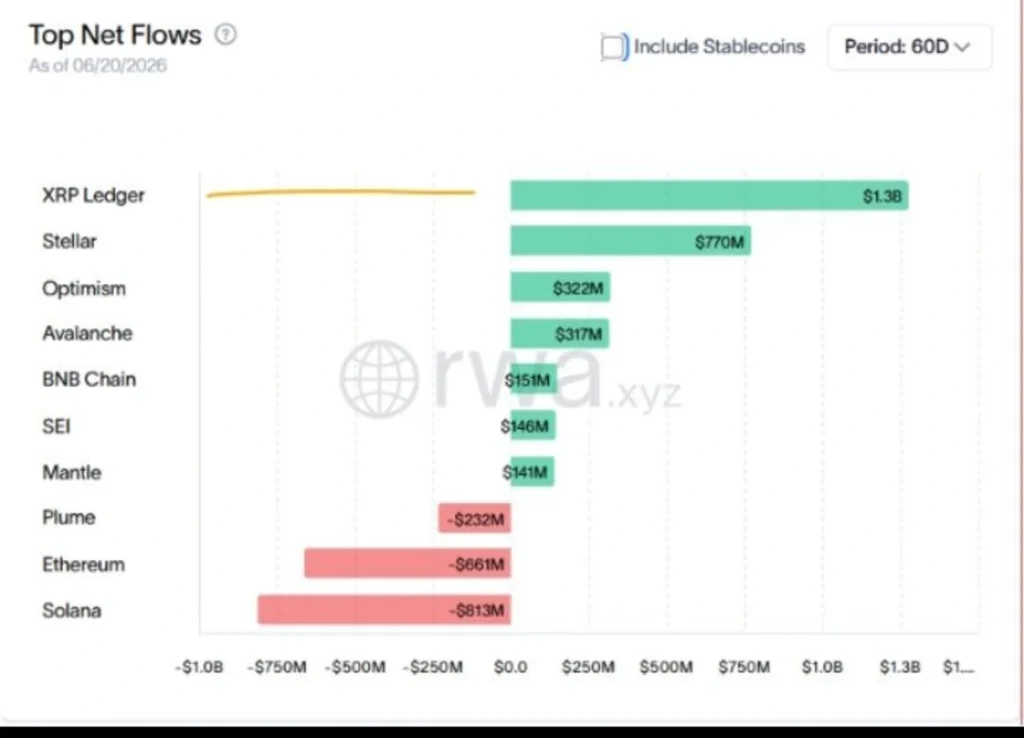
XRP Ledger RWA Transfer Volume Hits $7.03B — Up 1,469% in 30 Days
TechGaged | 2026-10-06

Blockchain
Ethereum’s Glamsterdam Test Pushes Sepolia Toward 200M Gas Blocks
TechGaged | 2026-10-06

Bitcoin
Bitcoin ETF Inflows Collapse 88% — But On-Chain Activity Is Heating Up
TechGaged | 2026-10-06
Crypto News
ETH Is Leaving Exchanges at a Record Pace — Here’s Where the Supply Is Going
Azeez | 2026-09-25

Crypto News
Crypto Open Interest Is Surging — Ethereum Stands Out
Azeez | 2026-09-22

Crypto News
Ethereum Stakers Are Sending a Powerful Signal
Azeez | 2026-09-20

Crypto News
ETH Is Approaching a Critical Breakout: Popular Analyst Reveals the Level That Matters
Azeez | 2026-09-17

Crypto News
U.S. Crypto ETFs Pulled in $281M: Institutional Money Is Returning
Azeez | 2026-09-15