








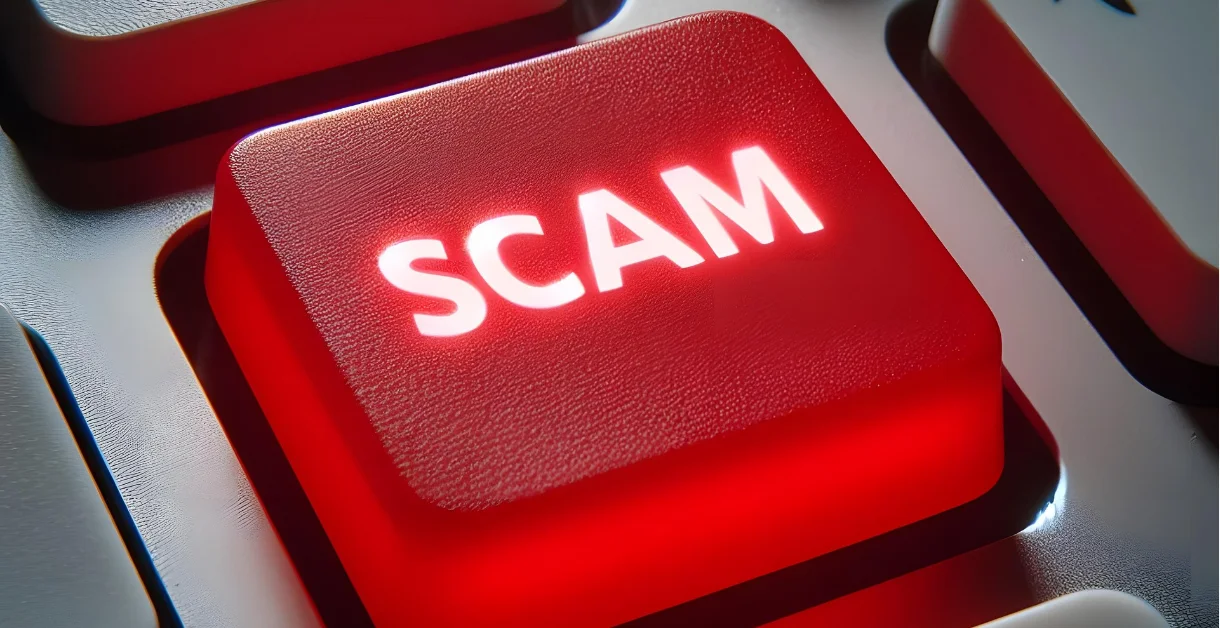
Scam button showing and flashing red on a keyboard signaling warning
Crypto Scams And How To Avoid Them
In Brief
- • Most crypto scams succeed by exploiting urgency, hype, and confusion, not by superior technology.
- • Protecting yourself comes down to habits like verifying sources, never sharing seed phrases, and slowing down before acting.
- • If returns are guaranteed, pressure is high, or transparency is missing, it's almost always a scam.
Ad
Crypto promises a future where anyone can access financial tools without banks or borders. It’s also global, fast, and irreversible. That’s why scammers usually target newcomers. If someone tricks you into sending funds, no customer support line can undo the transaction. That’s why it’s important you read this guide.
Scammers understand how excitement, urgency, and confusion work based on human behavior and mostly greed. They build schemes that feed on emotion, hide behind technical complexity, and vanish with your money before you even realize what happened.
If you are new to crypto, your best defense is understanding the landscape of scams, learning how to recognize red flags, and adopting habits that keep your assets safe.
Why Crypto Attracts Scammers
Crypto operates on a decentralized infrastructure. There is no single company that controls all transactions. Individuals use their own wallets, manage their own keys, and interact directly with protocols.
This structure creates opportunity and empowerment, but it removes many of the safety nets found in traditional finance. When a payment is sent, it’s settled on the blockchain, and that settlement is final.
No fraud desk can reverse the transfer. Transparency exists on-chain, but identity is often hidden, and cross-border movement is simple. Scammers exploit this environment by creating sophisticated frameworks that look official, while pressing for urgency so you act before you think.
They harness social proof by showing fake testimonials and fabricated community hype. Moreover, they often steal narratives from real projects and include them on polished websites to appear legitimate.
To the untrained eye, a scam can look like an opportunity that everyone’s already taking advantage of. Furthermore, another reason why crypto attracts scammers is due to its volatile nature.
Given how fast prices can rise and fall, scammers know that beginners chase this type of momentum and react blindly to hype. However, by the time you pause to check the full scope of the project, your funds might already be gone.
Phishing & Credential Theft
Phishing remains the most common path scammers use to gain access to crypto funds. It can arrive as an email, a direct message, a pop-up, or a link shared in a community chat.
The link leads to a site that looks like your wallet provider or exchange. The colors and logo match, the layout is familiar, and even the domain name may be only a single letter off from the real one.
However, once you enter your password or seed phrase, the scammer has everything to drain your wallet. Moreover, there’s a common variation of phishing that exploits browser extensions and wallet pop-up windows.
You might connect your wallet to what appears to be a legitimate decentralized application. The site then generates a signature request that looks harmless but actually grants approval to transfer all your tokens.
This is why you must never enter your seed phrase on any website. Also, make sure to verify the domain and the certificate. Read every signature request line by line and reject anything that requests unlimited approvals or access beyond a single transaction.
Fake Giveaways & Impersonation
Giveaway scams thrive on social media. A post might claim a major exchange or a well-known crypto figure is distributing tokens to celebrate a milestone. However, they instruct you to send a small amount of tokens to verify your address first.
They promise a larger amount in return, with some posts even including duplicated videos from real events to make the offer seem honest. However, there’s a rule of thumb you can follow to stay safe everytime.
No legitimate project will ever ask you to send crypto to receive more in return. Official announcements usually point you to a verified site, and you can confirm those details through multiple trusted channels.
If you ever feel uncertain, the best move is to do nothing. Scammers rely on impulse, and by removing the urgency aspect, you’ll be able to break their strategy.

Rug Pulls & Exit Scams
These are probably the most common types of crypto scams out there. Rug pulls are a form of fraud where a project appears legitimate, attracts liquidity or investments, and then the developers drain the liquidity and disappear.
Given that they take the liquidity out, trading is no longer possible, so the price collapses, and holders are left with assets that can’t be sold. Furthermore, some smart contracts include hidden backdoors. Where the deployer can mint unlimited tokens or redirect funds from the treasury.
For beginners, code review is not realistic, but risk reduction is. Always confirm that contracts are open source and that the community has examined them.
Make sure you check if liquidity is locked and review the unlock date. If transparency is weak, then that’s a red flag.
Fake Support & Social Engineering
Not all scams depend on code or tokens. Many rely on manipulation and the natural human inclination to trust those who promise solutions or huge profits.
The pattern hasn’t changed a bit in the last few years. Whenever you ask for help or assistance in a public forum, you suddenly get a message from someone claiming to be part of the “support team” of the project.
They probably use the logo of the project as their profile picture, claim admin status, and use a friendly tone. Therefore, they say they can fix your problem if you share your seed phrase or a screenshot of your wallet, and as soon as you comply, your funds vanish.
Keep in mind that legitimate teams will never ask for seed phrases or direct access to your wallet, and many post these warnings within the projects’ channels. Keep conversations on verified platforms and never jump into private messages with someone you didn’t even approach.
Habits That Protect Beginners
Security is built on habits that you repeat until they become automatic. A good place to start is by controlling your environment. Bookmark official sites and use those bookmarks every time.
Moreover, you should always install wallet applications only from verified app stores and confirm the developer names before you download. Also, always treat your seed phrase like the master key to your home, and it’s recommended you save it in a physical format, such as in a personal notebook.
Even though it might seem standard at this point, make use of two-factor authentication features whenever possible. This ensures you add an extra layer of security to your accounts.
On a separate note, always start small with new platforms. Test first with small deposit and withdrawal amounts, and review transaction permissions in your wallet. That way you’ll be able to identify and revoke unnecessary approvals using reputable tools.
Finally, keep long-term holdings in a hardware wallet and use hot wallets with smaller holdings for daily interactions. This will help to reduce exposure and minimize damage if you accidentally make a mistake.
Staying Informed Without Burning Out
Crypto evolves quickly, with new platforms being developed every week, and with them new scam variations. However, you can stay safe without being vigilant 24/7 by curating a handful of trusted sources.
Follow developer updates from major protocols, read security guidelines from wallet providers, and participate in communities that value evidence and caution. If a source repeatedly sensationalizes stories or pushes you toward urgency, remove it from your feed.
Crypto will continue to attract scammers because it’s open, fast, and global. That reality does not diminish the value of the technology, but it does demand respect for its risks.
Always remember that if something promises certainty in a realm defined by volatility, it’s not good advice but potentially a trap. Therefore, develop a mindset that values patience and clarity. With that mindset, you’ll navigate crypto as an empowered participant rather than a target.
Frequently Asked Questions
Why are crypto scams so common for beginners?
Because crypto transactions are irreversible, global, and often anonymous, which allows scammers to exploit urgency, hype, and lack of experience.
What is the most common crypto scam beginners fall for?
Phishing scams, where fake websites or messages trick users into revealing seed phrases or approving malicious transactions.
How can I quickly tell if a crypto project is a scam?
Guaranteed returns, pressure to act fast, anonymous teams, and unclear sources of yield are strong warning signs of a scam.
Can crypto transactions be reversed if I get scammed?
No. Once a transaction is confirmed on the blockchain, it cannot be undone, which is why prevention is critical.
What is the safest mindset for avoiding crypto scams?
Slow down, verify everything through official sources, and assume urgency and secrecy are red flags until proven otherwise.
How do you rate this article?
Subscribe to our YouTube channel for crypto market insights and educational videos.






Join our Socials
Briefly, clearly and without noise – get the most important crypto news and market insights first.

Most Read Today
1
Chainlink’s 499% Social Volume Spike: Why Attention is Outpacing Price
2Cardano (ADA) Price Analysis: Quiet Accumulation as Technical Signals Begin to Strengthen
3Mantle’s $1B Milestone: Why MNT is the Next Layer 2 Powerhouse to Watch
4Digital Silver’s Silent Strength: Litecoin (LTC) Fundamental and Technical Dive
5Zcash: The VC-Backed Rebirth of Private Finance
Latest







8
Also read
Similar stories you might like.
Industry
Major Bank Joins Swift’s Initiative for Cross-Border and Tokenised Payments
Patrick | 2026-02-17

Blockchain
Warning: Postal Phishing Targets Ledger And Trezor Users Offline
Ana | 2026-02-20

Crypto News
From Viral Token to Federal Prison: SafeMoon’s CEO Sentenced to 100 Months
Patrick | 2026-02-10

Blockchain
How Bridge Hacks Actually Happen in 2026
Patrick | 2026-01-20

Crypto Guides
How Crypto Burnout Leads to Losses and Security Failures
Rokas | 2026-01-17

Crypto Guides
New Crypto Scams That Don’t Break Anything
Rokas | 2026-01-16

Industry
$4 Billion wiped by Crypto Scams and Hacks in 2025
Shedrach | 2026-01-13

Crypto Guides
Crypto Regulation in 2025: Enforcement That Nobody Escapes
Patrick | 2026-01-11

Crypto Guides
Your Wallet Works But You Can’t Use It – What It Means
Patrick | 2026-01-09
Crypto Guides
Staying Safe: Scams Come From Simple Interactions
Patrick | 2026-01-09