








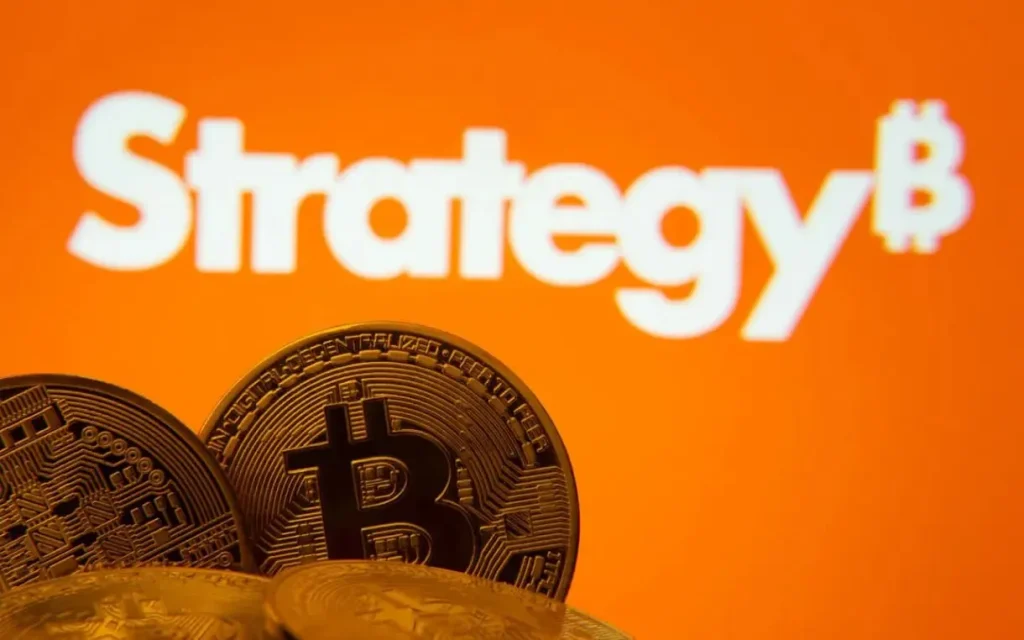
Hand holding a Bitcoin coin in front of a trading chart. Source: TechGaged / Shutterstock
Controversial Strategy Bitcoin Market Resolves “No” Despite Backlash
In Brief
- • Polymarket resolved the Strategy market as “No.”
- • UMA voters overwhelmingly supported the outcome.
- • The decision sparked controversy among traders.

Polymarket has finalized one of the most controversial crypto prediction markets of 2026 after UMA token holders overwhelmingly backed a “No” resolution in a dispute involving Strategy’s first Bitcoin (BTC) sale since 2022. The decision ends days of challenges and debate, but it has also intensified criticism from traders who argue the platform resolved the market against the underlying event itself. At the center of the dispute was a simple question: did Strategy sell any Bitcoin before May 31?
UMA Vote Confirms “No” Outcome on Strategy Market
As TechGaged reported earlier, the disputed Polymarket contract asked whether enterprise software company Strategy, formerly MicroStrategy, would sell any of its Bitcoin by May 31, 2026.
According to a June 1 filing, the company sold 32 BTC between May 26 and May 31 for approximately $2.5 million, marking its first Bitcoin sale in more than three years. The transaction itself wasn’t widely disputed. Instead, the controversy focused on when the sale became publicly verifiable.
Latest Stories
US Government Seizes Crypto from Binance User Account
Digital Asset Firms Eyed by Dune Acquisition III for SPAC Merger

Bullish: Go-Ethereum Client Update Lays Groundwork for Amsterdam Hardfork
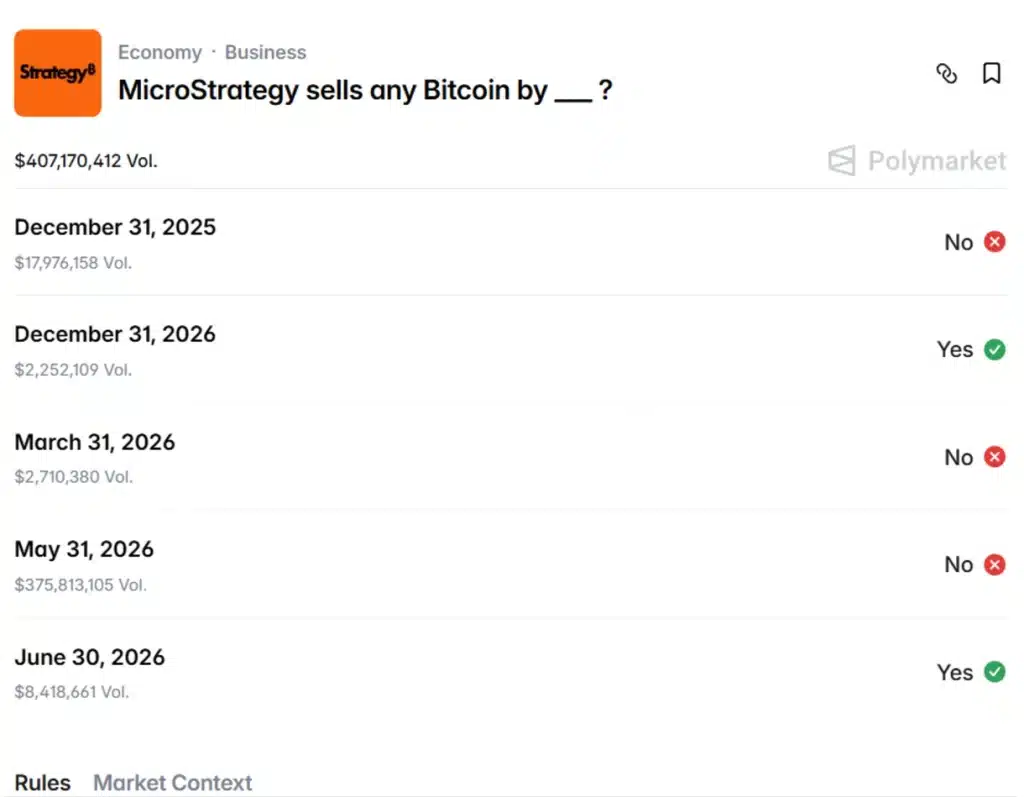
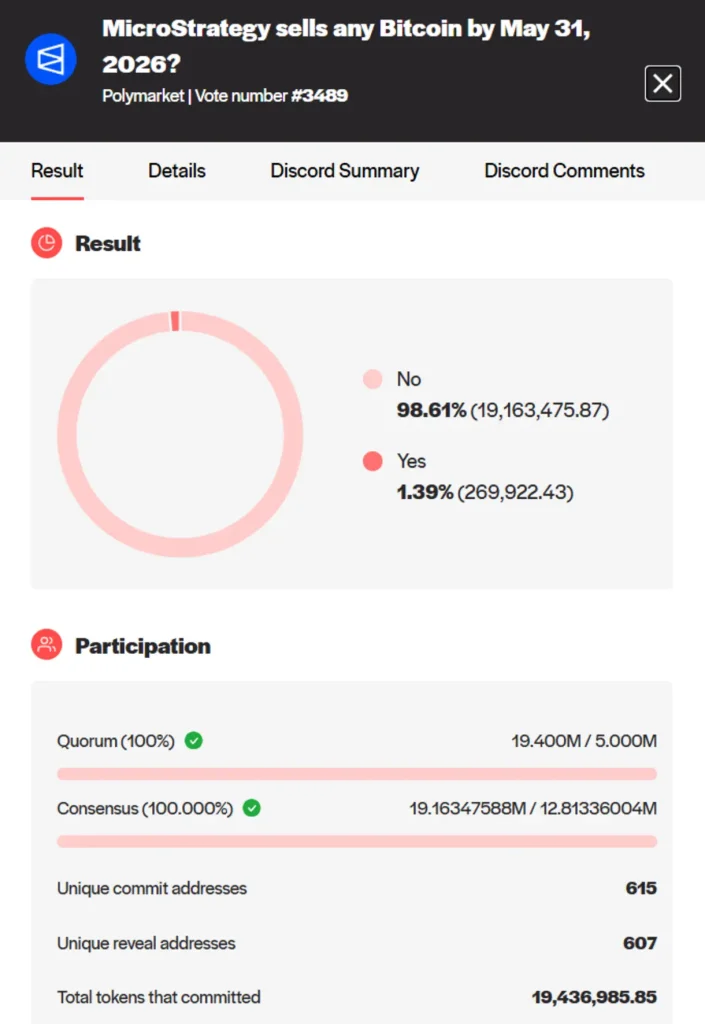
Following multiple challenges, the market entered UMA’s oracle resolution process, where token holders vote on disputed outcomes. The final vote overwhelmingly favored a “No” resolution, with 98.6% of voting power supporting that result.
Screenshots from Polymarket’s resolution page show the May 31 contract officially settled as “No,” despite Strategy later confirming that the sale occurred within the specified timeframe.
Traders Question Rule Changes and Market Integrity
Critics argue the market should’ve resolved “Yes” because Strategy’s own filing confirmed the transaction happened before May 31.
Supporters of the “No” outcome point to additional context later added to the market, stating that confirmation achieved outside the market’s timeframe would not qualify. Because Strategy disclosed the sale on June 1, they argue the market couldn’t be confirmed before the deadline.
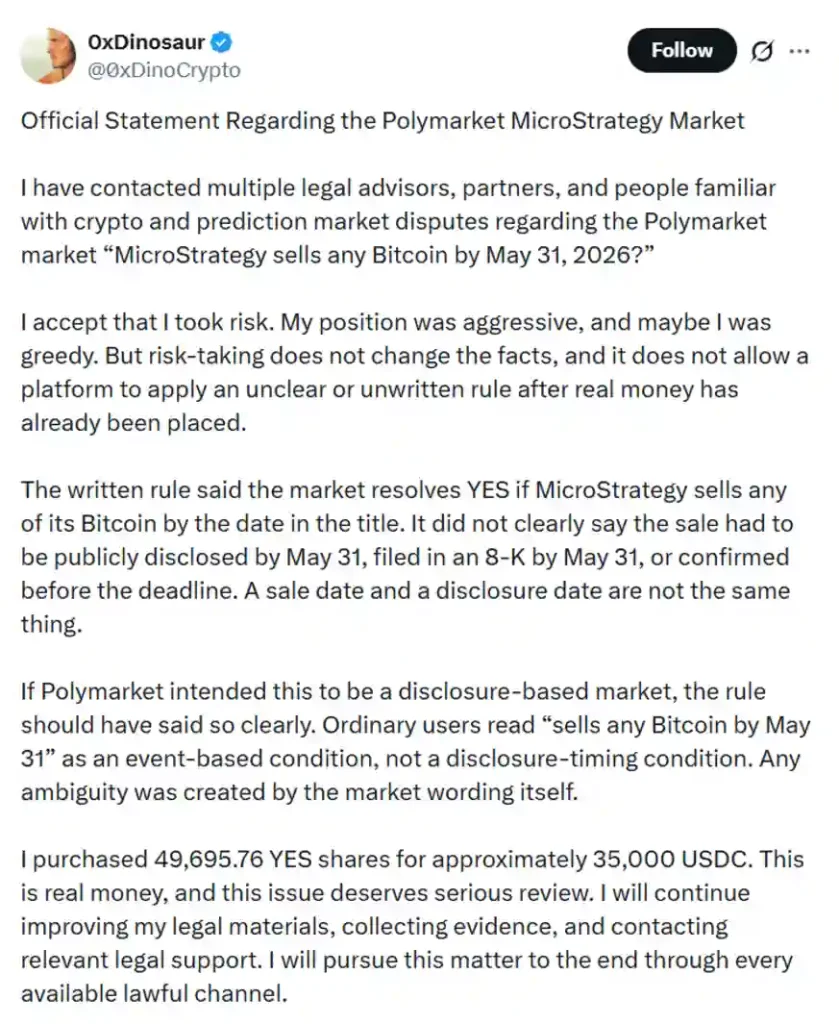
The decision has fueled significant backlash across crypto social media. One trader claimed losses of $500,000 after betting heavily on a “Yes” outcome, whereas others accused the platform of changing or reinterpreting rules after trading activity had already occurred.
The dispute has also attracted attention from industry researchers and market observers, who say the controversy highlights a wider challenge facing prediction markets: whether contracts should resolve based strictly on real-world events or based on when those events become publicly verifiable.
Where many participants are concerned, the argument is no longer about Strategy’s 32 BTC sale. Instead, it has become a debate about the integrity of prediction market platforms. As platforms such as Polymarket continue growing in popularity, the outcome could influence the structuring and resolution of future event contracts.
How do you rate this article?
Subscribe to our YouTube channel for crypto market insights and educational videos.






Join our Socials
Briefly, clearly and without noise – get the most important crypto news and market insights first.

Most Read Today
1
Clarity Act 2026: Everything You Should Know
2Financial Experts Ranked by Forecast Accuracy: Who Gets Market Predictions Right?
3Robert Kiyosaki Prediction Accuracy: Full Report (1990–2026)
4Crypto Trading Volume Collapse: March on Track for Worst Month Since 2020
5Jim Cramer Prediction Accuracy: Full Report (2000–2026)
Latest






8
Also read
Similar stories you might like.
Market
Louisiana Pension Fund Boosts MicroStrategy Stake in Q2
TechGaged | 2026-07-23

Regulation
MARA Holdings Faces Suit for Undermining AI and Bitcoin Mining Expansion
TechGaged | 2026-07-23

Regulation
Celsius Bankruptcy Case Expands, Names Bitboy Crypto and Others as Parties
TechGaged | 2026-07-22

Blockchain
Zcash Drops 5.91% to $510.16 Amid Broader Market Activity
TechGaged | 2026-07-22

Regulation
FTX Accuses Justin Sun of Sweeping $10M in Bitcoin from Poloniex
TechGaged | 2026-07-15
Market
MicroStrategy Gains New Institutional Backing from Verus Capital Partners
TechGaged | 2026-07-10

Blockchain
Bitcoin Core v30.3 Released, Improving Foundation: What to Know
TechGaged | 2026-07-10

Market
Bitwise Files Amended S-1 for Spot NEAR ETF, Eyes Approval
TechGaged | 2026-07-02

Regulation
US Forfeiture Targets 41 Bitcoin in Legal Action
TechGaged | 2026-07-02

Blockchain
Long-Term Bitcoin Holders Accumulate, Signaling Potential Bottom
TechGaged | 2026-07-01