












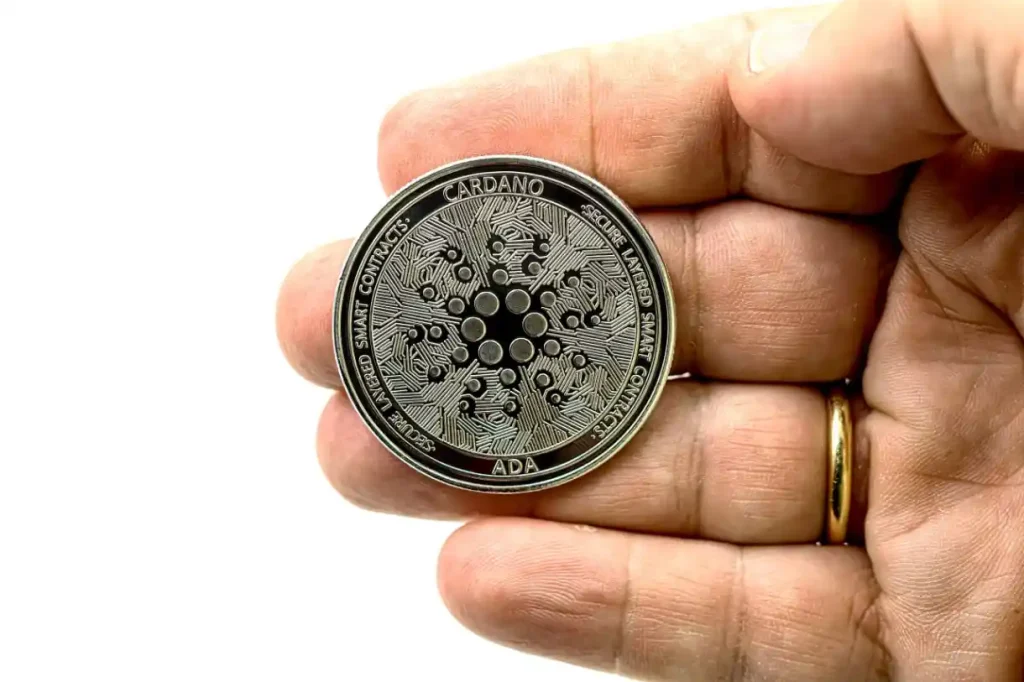
Hand holding a Cardano (ADA) coin. Source: TechGaged / Shutterstock
Charles Hoskinson Explains Cardano’s 1,096 BTC Mystery, Sparks Debate
In Brief
- • Charles Hoskinson said 1,096 BTC was spent on Cardano audit work.
- • Critics are demanding invoices and payment records to support the claim.
- • The explanation has reignited debate over Cardano's early finances.

Cardano (ADA) founder Charles Hoskinson has offered his clearest explanation yet for what happened to 1,096 BTC raised during Cardano’s early crowdfunding campaign. During a recent AMA livestream, he said the Bitcoin went into covering audit-related expenses connected to the Isle of Man Foundation in 2016 and 2017. The explanation, however, has done little to settle the controversy, and critics now demand documentary evidence supporting the payments.
Hoskinson Says Bitcoin Paid for Audit Work
During the livestream on June 13, Hoskinson addressed long-running questions surrounding approximately 1,096 BTC that had been held by the Isle of Man Foundation, an organization involved in Cardano’s early legal and operational structure.
According to Hoskinson, the Bitcoin went into satisfying obligations related to an audit requested by former Cardano chairman Michael Parsons during the project’s early years.
Latest Stories
Here’s How Close Bitmine Is to Owning 5% of Ethereum

Arman Tsarukyan Turns $1 Million Into $5.7 Million on Jack.com After One of the Biggest UFC Upsets of the Year

Bitwise Adds Another $5.18M in HYPE — Is Institutional Demand Rising?
He argued that critics are overstating the value of the payment by using today’s Bitcoin prices and not its value at the time of the expenses.
Hoskinson said Bitcoin traded around $414 in March 2016 that puts the payment at about $400,000, which he said covered work performed by three independent auditors, Michael Parsons, John McGuire, and Bruce Milligan.
“The closing price of Bitcoin March 13, 2016, was $414. That’s about $400,000 for three auditors.”
He also argued that repeated demands for additional explanations have become counterproductive, and said every response simply generates new allegations rather than resolving outstanding questions.
Critics Call for Documentation
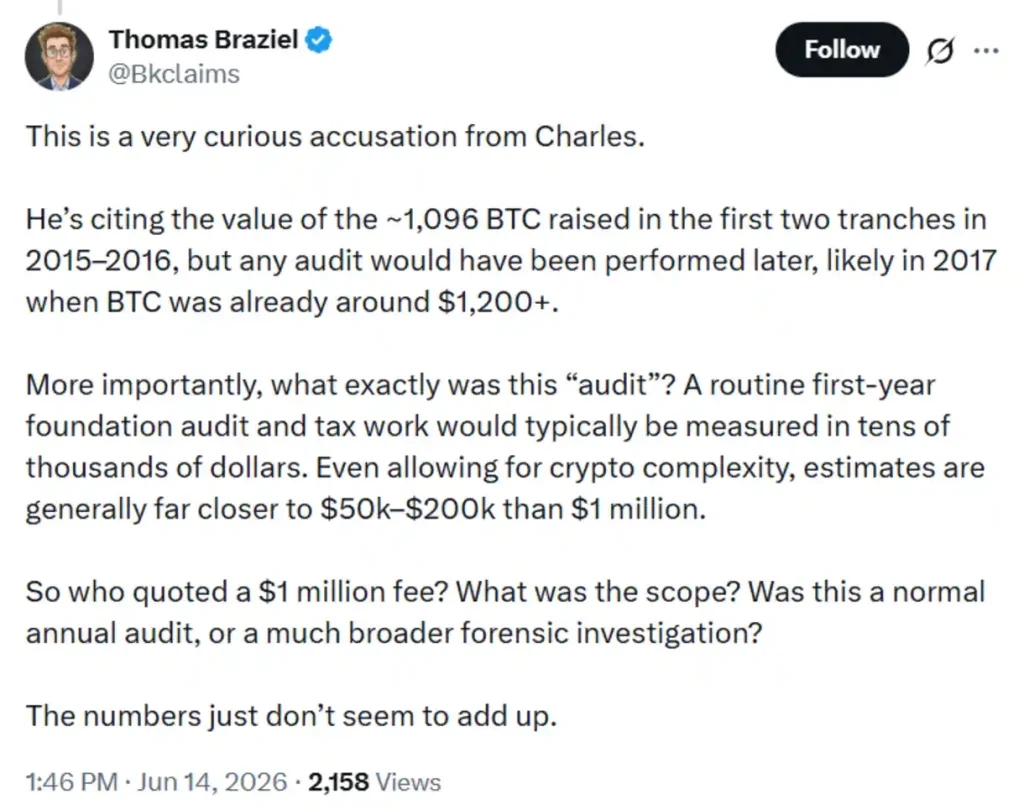
That said, investor Thomas Braziel, who has been publicly questioning Cardano’s early finances, said the AMA answered one question but raised several more.
Following the livestream, Braziel argued that if the Bitcoin indeed went on audit-related work, the Cardano Foundation should publish the supporting documentation, including invoices, agreements, approvals, and payment records.
“If that’s the explanation, then the next step is simple: publish the invoices, agreements, and approvals, and payment records.”“If that’s the explanation, then the next step is simple: publish the invoices, agreements, and approvals, and payment records.”
He also questioned the timeline presented by Hoskinson, noting that many audits would likely have taken place later, when Bitcoin traded well above its March 2016 price.
“The numbers just don’t seem to add up,” Braziel wrote, and also asked how IOHK ultimately came to control around 95% of the Bitcoin raised during Cardano’s crowdfunding whereas the Foundation received only a small share of the project’s economics.
ADA was at press time on June 16 trading at $0.1798, which indicates a decline of 0.7% in the last 24 hours, an increase of 6.2% over the past seven days, and a 29.9% drop accumulated across the month, per the latest chart data.
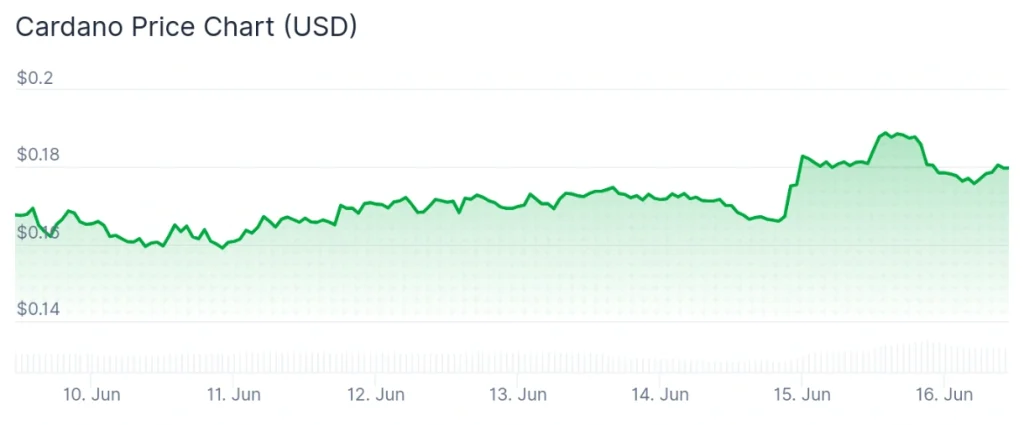
Meanwhile, the dispute arrives as Cardano continues more general discussions surrounding treasury management and organizational transparency, topics that have generated increasing debate across the ecosystem in recent months.
How do you rate this article?
Subscribe to our YouTube channel for crypto market insights and educational videos.





Join our Socials
Briefly, clearly and without noise – get the most important crypto news and market insights first.





8
Also read
Similar stories you might like.
Altcoins
Here’s How Close Bitmine Is to Owning 5% of Ethereum
Ana | 2026-06-16
Altcoins
Bitcoin Bulls Celebrate, But Warning Signs Remain
Rokas | 2026-06-16
Crypto News
Kiyosaki’s Latest Warning Puts Bitcoin, Ethereum, and Gold Back in the Spotlight
Azeez | 2026-06-16

Crypto News
Peter Brandt Spots a Huge Market Opportunity — Will Crypto Benefit?
Azeez | 2026-06-15
Altcoins
Bitcoin Climbs Above $66K as Crypto Rally Accelerates
Ana | 2026-06-15
Crypto News
One Exchange Metric Is Changing the XRP Story
Azeez | 2026-06-15
Bitcoin
‘Still Adding Dots’: Saylor Has Bitcoin Bulls Watching Again
Ana | 2026-06-15
Altcoins
Pokémon Card Craze Is Fueling Solana’s Latest Boom
Ana | 2026-06-15
Crypto News
Bitcoin’s Biggest Mining Reset in Months Is Here
Ana | 2026-06-15
Bitcoin
Michael Saylor Cheers 25% of the Mag8 Now Holding Bitcoin
Rokas | 2026-06-15