













Ancient Campfire Discovery Rewrites Human Evolution
Ancient Campfire Discovery Rewrites Human Evolution
In Brief
- • Evidence shows humans were deliberately making fire 400,000 years ago.
- • The discovery was made at a prehistoric site in southern Britain.
- • It pushes a major human innovation far earlier than previously believed.
The story of human evolution just gained a dramatic new chapter. Scientists have uncovered evidence that humans were deliberately making fire 400,000 years ago, pushing the timeline of this transformative innovation back by an astonishing 350,000 years.
Ad

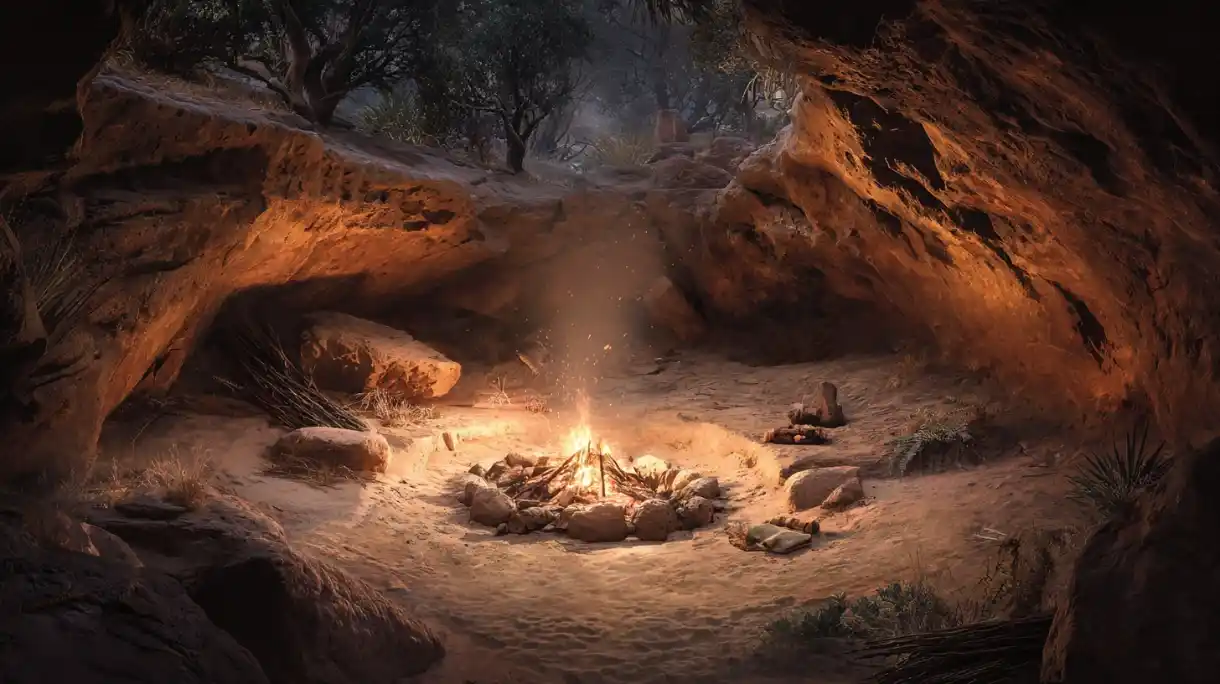
As it happens, the discovery comes from the site of Barnham in southern Britain, where archaeologists identified ancient hearth remains, fire-cracked stone tools, and rare mineral fragments used to strike sparks. Together, the findings represent the earliest known evidence of intentional fire-making anywhere in the world.
Mastery of fire is widely considered one of the most important breakthroughs in human history. It enabled early humans to cook food, stay warm in colder climates, fend off predators, and gather socially after dark, laying the groundwork for culture, communication, and cooperation.

Campfire That Rewrites Prehistory
Until now, the oldest confirmed cases of controlled fire, or fires deliberately lit using tools, dated back roughly 50,000 years, primarily at Neanderthal sites in France. Earlier humans were thought to have relied mainly on naturally occurring wildfires. The Barnham site upends that assumption.
Ad
Researchers identified heated clay sediments, chemical traces associated with combustion, and fire-damaged flint handaxes. But the most compelling clue came from two fragments of iron pyrite, a mineral used with flint to generate sparks.

Pyrite is extremely rare in the region, according to decades of geological surveys. That rarity strongly suggests it was intentionally transported to the site for fire-making.
According to Nick Ashton, an archaeologist at the British Museum and co-author of the study:
“This is the most remarkable discovery of my career, and I’m very proud of the teamwork that it has taken to reach this groundbreaking conclusion. It’s incredible that some of the oldest groups of Neanderthals had the knowledge of the properties of flint, pyrite and tinder at such an early date.’
Who Started the Fire?
The identity of these fire-makers remains uncertain. The most likely candidates are Neanderthals, who were known to inhabit the region around that time. Another possibility is Homo heidelbergensis, an ancient human species that lived in Europe before Neanderthals fully emerged.
It was not Homo sapiens, as the modern humans appeared in Africa much later, around 300,000 years ago. Regardless of the species, the implications are profound. Southern Britain 400,000 years ago was cold and unforgiving. Fire would have been a decisive survival advantage, allowing humans to expand northward and thrive in harsher environments.

Fire as the Engine of Human Progress
Beyond survival, fire reshaped how humans thought and lived. As co-author Rob Davis of the British Museum explained:
“The implications are enormous. The ability to create and control fire is one of the most important turning points in human history with practical and social benefits that changed human evolution. This extraordinary discovery pushes this turning point back by some 350,000 years”
Fire extended the day beyond sunlight, creating spaces where early humans could share food, teach skills, communicate ideas, and possibly even develop early language.
New Marker in Human Evolution
The researchers believe the fire-making knowledge likely arrived in Britain from continental Europe via a land bridge, after a severe cold period wiped out earlier populations.
With this discovery, scientists can now place a clear marker in the timeline of human evolution, as controlled fire was already part of human life 400,000 years ago.
More Must-Reads:
How do you rate this article?
Subscribe to our YouTube channel for crypto market insights and educational videos.






Join our Socials
Briefly, clearly and without noise – get the most important crypto news and market insights first.
Most Read Today
1
Peter Schiff Warns of a U.S. Dollar Collapse Far Worse Than 2008
2Samsung crushes Apple with over 700 million more smartphones shipped in a decade
3Dubai Insurance Launches Crypto Wallet for Premium Payments & Claims
4XRP Whales Buy The Dip While Price Goes Nowhere
5Luxury Meets Hash Power: This $40K Watch Actually Mines Bitcoin
Latest






8
Also read
Similar stories you might like.

Industry
Google Searches for “How to Buy Gold” Explode Globally, Hitting a Two-Decade High
Rokas | 2026-01-26

Industry
Businesses now use crypto as operational capital, CoinGate data reveals a structural shift
Rokas | 2026-01-21

Bitcoin
$455 Billion in Bitcoin Exposed to Quantum Attack Risk via Address Reuse, Up 16% Since 2020
Jastra | 2026-01-20

Altcoins
Iran’s Crypto Activity Surges During Protests; Here’s Why
Ana | 2026-01-16

Industry
Stablecoin Market Share Hits an All-Time High of 10.19%
Jastra | 2026-01-14
No image

Bitcoin
Only Three Governments Increased Bitcoin Holdings in 2025 – U.S. Leads Following 130,000 BTC Seizure
Jastra | 2026-01-05

Industry
Solana Tokens Lose $157B in 2025, The Largest Dollar-Value Drop in the Chain’s History
Jastra | 2025-12-30

Artificial Intelligence
New Epstein Disclosures Collide With an AI Project Built Months Earlier
Ana | 2025-12-22

Science
Scientists Reconstruct Skull of 1.6-Million-Year-Old Ethiopian Homo Erectus
Shedrach | 2025-12-19