











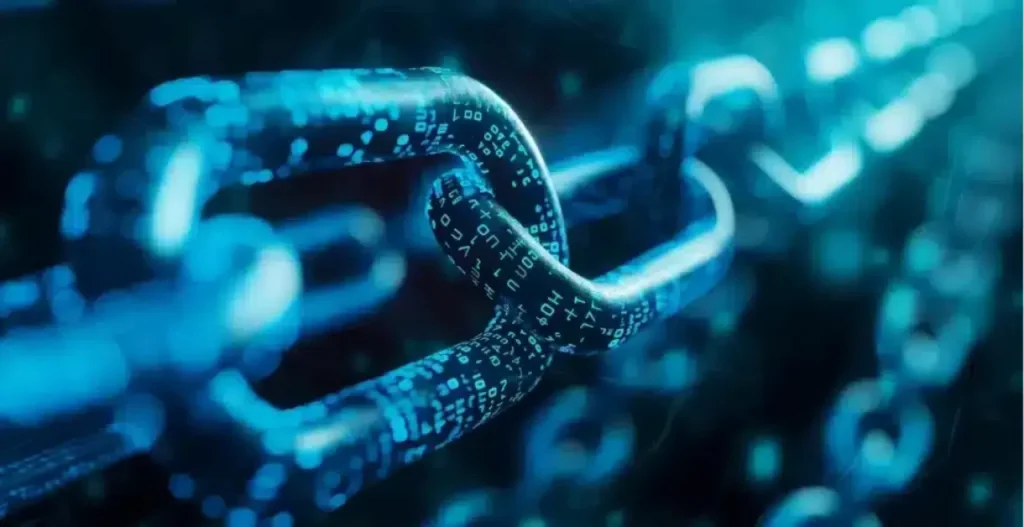
Digital chain symbolizing blockchain security. Source: TechGaged / Shutterstock
Algorand Targets Full Quantum Resistance by 2027
In Brief
- • Algorand targets full quantum resistance by 2027.
- • Native post-quantum accounts arrive in 2026.
- • The roadmap also includes quantum-safe consensus research.

Blockchain platform Algorand (ALGO) has outlined a roadmap to make its network resistant to future quantum computer attacks, with native post-quantum accounts scheduled for 2026 and more extensive protocol upgrades continuing through 2027. The plan includes Falcon-based signatures, hybrid accounts, post-quantum multisignatures, and research into quantum-safe consensus and validator selection. The announcement comes as blockchain developers increasingly prepare for the long-term risks that quantum computing could pose to today’s cryptography.
Native Post-Quantum Accounts Arrive in 2026
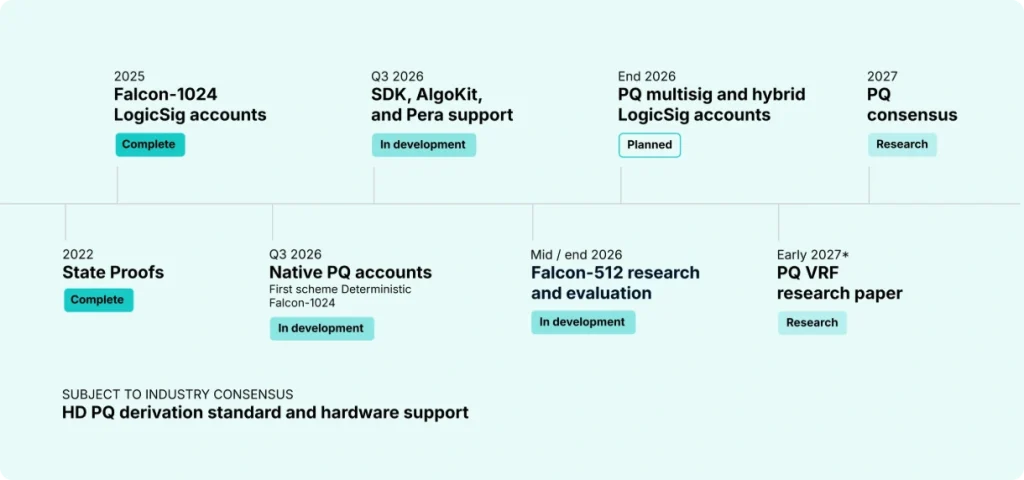
According to the roadmap that the company shared on June 18, Algorand’s first major milestone will come in Q3 2026 with native support for post-quantum accounts built directly into the protocol.
These accounts will initially use Falcon-1024, which extends the work that began with LogicSig-based Falcon accounts introduced in 2025. Though those earlier accounts proved post-quantum signatures could work on Algorand, they were not integrated into the ledger itself.
Latest Stories
Robert Kiyosaki Says Smart Investors Wait for This Bitcoin Signal

Bridge Exploit Forces Emergency Response From Taiko, Users Told to Exit
Solana Wins Landmark Korean Banking Deal
The same protocol release will also introduce network-level support for multiple signature schemes, allowing traditional Ed25519 accounts to coexist alongside post-quantum signatures. Algorand describes this as a key step toward “cryptographic agility,” enabling additional signature algorithms to be adopted later without requiring major protocol changes.
Beyond the protocol itself, the Foundation expects SDKs, AlgoKit, and Pera Wallet to support Falcon account derivation during the same Q3 2026 release window. Hardware wallet support will follow once the industry reaches agreement on a standardized post-quantum hierarchical deterministic wallet derivation method.
The roadmap also outlines support for hybrid accounts by the end of 2026, allowing users to combine classical elliptic-curve cryptography with post-quantum signatures. According to Algorand, these hybrid accounts aim to protect against both today’s conventional attacks and future quantum computers and give institutions greater flexibility for treasury management and high-value operations.
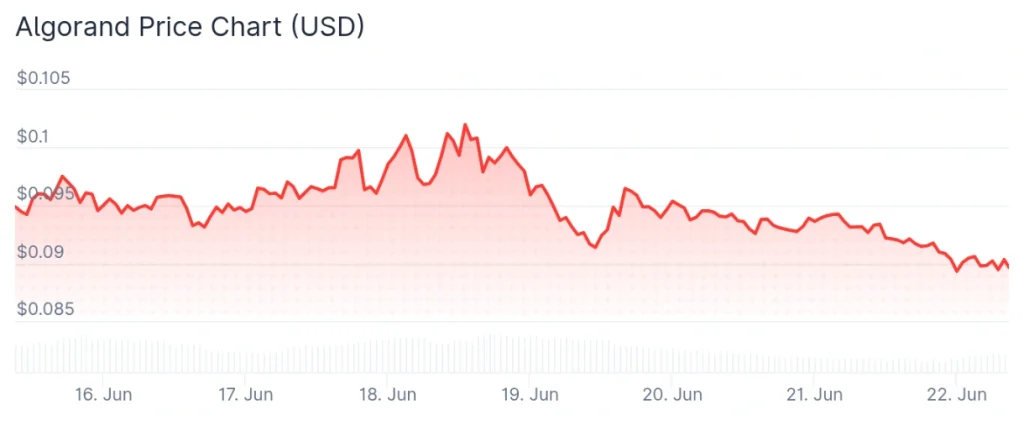
At press time on June 22, Algorand’s native token, ALGO, was trading at the price of $0.08966, which indicates a 3.3% decline on the day, a drop of 4% across the week, and a loss of 19.5% over the past month, per the latest chart data.
Multisignatures and Consensus Remain Active Research
Native future-proof multisignature accounts should also come out by the end of 2026. Instead of using scheme-specific threshold security, Algorand intends to build a more flexible policy layer capable of allowing weighted approvals, hybrid combinations of classical and future-proof signers, and future signature algorithms as standards evolve.
The Foundation is also continuing research into updating one of the chain’s most important cryptographic components: its Verifiable Random Function (VRF). Because the current VRF relies on elliptic-curve cryptography, researchers are evaluating quantum-resistant alternatives that preserve both efficiency and committee-selection privacy. A research paper describing a candidate design should arrive in early 2027, provided that ongoing security analysis is successful.
Meanwhile, Algorand is investigating post-quantum consensus signatures to replace the Ed25519 signatures currently securing validator messages. Falcon remains the leading candidate due to its relatively compact signatures, though the Foundation expects any migration to operate under a hybrid model for some time as both classical and post-quantum signatures run in parallel.
The roadmap also includes ongoing work on Falcon-512, expected later in 2026, alongside proof-of-concept implementations demonstrating Falcon-1024 signing on hardware wallets. According to the Foundation, current tests on a Trezor Safe 5 show signing takes roughly 0.7 seconds per transaction, suggesting post-quantum signatures are becoming practical even on constrained hardware.
How do you rate this article?
Subscribe to our YouTube channel for crypto market insights and educational videos.






Join our Socials
Briefly, clearly and without noise – get the most important crypto news and market insights first.
Most Read Today
1
Coinbase Introduces a Wallet Built for Machines, Not Humans
2Is This the Institutional Catalyst XRP Holders Have Been Waiting For?
3Franklin Templeton’s Bitcoin Strategy Could Reshape Portfolio Investing
4Bitcoin ETFs Are Selling — Except for One Major Player
5Clarity Act 2026: Everything You Should Know
Latest





8
Also read
Similar stories you might like.
Crypto News
Solana Wins Landmark Korean Banking Deal
Rokas | 2026-06-22

Blockchain
A Dead Aztec Product Just Lost $2.2 Million
Ana | 2026-06-19
Crypto News
A New Era of Digital Securities Is Emerging — These Networks Are Leading
Azeez | 2026-06-20

Blockchain
Fidelity Enters the $320B Stablecoin Reserve Race With New Fund
Rokas | 2026-06-19
Blockchain
ZKsync Builder Faces Backlash After Layoffs
Rokas | 2026-06-18
Blockchain
Ethereum Just Got Its First Confidential DeFi Vault
Ana | 2026-06-17
Blockchain
Coinbase Just Unveiled Real Tokenized Stocks
Rokas | 2026-06-17

Crypto News
Bitcoin’s Biggest Mining Reset in Months Is Here
Ana | 2026-06-15
Blockchain
LG Electronics Launches Custom Arbitrum Blockchain for Digital Ads
Ana | 2026-06-12

Altcoins
Joe Lubin Sees Ethereum Going All-In on ZK Proofs
Ana | 2026-06-11