













AI on the frontlines: U.S. Army develops new long-range sensor tech
AI on the frontlines: U.S. Army develops new long-range sensor tech
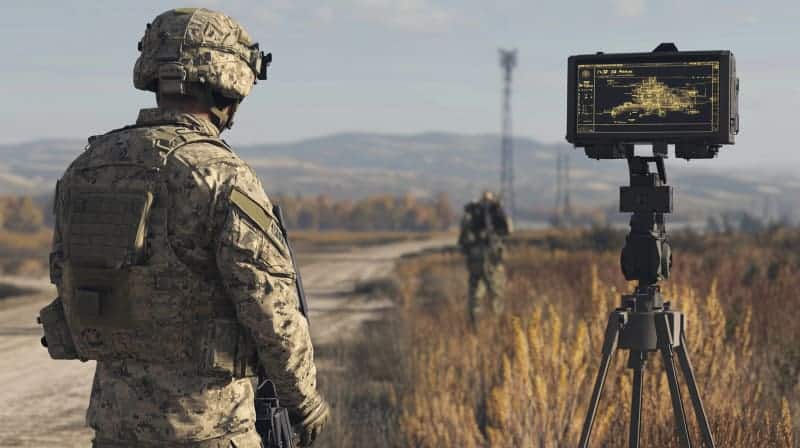
Defense technology company QinetiQ is working alongside the U.S. Army to help it develop a next-generation long-range sensor system powered by artificial intelligence (AI), called the Future Advanced Long-Range Common Optical/Netted-Fires Sensor (FALCONS).
Ad
As it happens, the upcoming system will take the place of the Army’s current Long-Range Advanced Scout Surveillance System (LRAS3). It employs AI and can detect and identify targets from farther distances, even in bad weather, according to a press release from February 25.
Expanding the U.S. Army range
To develop this cutting-edge technology, QinetiQ US is working with the U.S. Army Program Executive Office Intelligence, Electronic Warfare and Sensors (PEO IEW&S). The ultimate goal is to help soldiers find targets beyond the range of enemy weapons and enhance battlefield awareness as part of its modernization plans for 2030 onward.
Commenting on the development, Jonathan Riksen, the executive vice president and general manager of National & Global Security Solutions at QinetiQ US, explained:
Ad
“QinetiQ US brings deep expertise in complex systems integration and a thorough understanding of soldier needs to the FALCONS program. (…) We are uniquely positioned to coordinate with key suppliers and integrate advanced technologies – from AI-enabled target recognition to multi-spectrum sensing – into a cohesive system that will give our warfighters a decisive advantage on the battlefield.”
The system could also include semi-autonomous features to reduce the work soldiers need to do while improving accuracy in finding and identifying targets. QinetiQ US will also make sure the FALCONS system works seamlessly with other battlefield technologies.
AI tech to address threats
Meanwhile, the U.S. Naval Postgraduate School (NPS) has developed an AI method to accurately assess drone threats in response to the recent proliferation of threats from inexpensive unmanned autonomous systems (UAS), also known as drones.
As a reminder, the U.S. government has earlier resolved to deploy high-tech drone detection technology as weeks of unidentified drones over New Jersey caused panic in December and lawmakers demanded an investigation. Indeed, there were at least 3,000 sightings and the U.S. military officials said they didn’t belong to them.
How do you rate this article?
Subscribe to our YouTube channel for crypto market insights and educational videos.






Join our Socials
Briefly, clearly and without noise – get the most important crypto news and market insights first.
Most Read Today
1
Peter Schiff Warns of a U.S. Dollar Collapse Far Worse Than 2008
2Samsung crushes Apple with over 700 million more smartphones shipped in a decade
3Dubai Insurance Launches Crypto Wallet for Premium Payments & Claims
4XRP Whales Buy The Dip While Price Goes Nowhere
5Luxury Meets Hash Power: This $40K Watch Actually Mines Bitcoin
Latest






8
Also read
Similar stories you might like.

Artificial Intelligence
Robert Kiyosaki Warns AI Bubble May Be Bigger Than Dot-Com
Ana | 2025-12-24

Artificial Intelligence
New Epstein Disclosures Collide With an AI Project Built Months Earlier
Ana | 2025-12-22

Artificial Intelligence
Gemini Can Now Detect AI-Generated Files
Shedrach | 2025-12-19

Artificial Intelligence
Fetch.ai Launches Autonomous AI-to-AI USDC Settlement
Shedrach | 2025-12-19

Artificial Intelligence
Tesla Semi Tease Hints At Big Changes Under The Hood
Ana | 2025-12-19

Artificial Intelligence
Scientists Use AI to Crack Nature’s Hidden Laws
Ana | 2025-12-18

Artificial Intelligence
Can AI Ever Be Proven Conscious? A Philosopher Says No
Ana | 2025-12-18

Artificial Intelligence
Researchers Uncover Hidden Bias in Cancer Diagnosis AI
Ana | 2025-12-17

Artificial Intelligence
AI Learns Math Better by Arguing With Itself
Ana | 2025-12-15

Artificial Intelligence
Breakthrough AI Enables Seamless Control of Prosthetic Hands
Shedrach | 2025-12-12